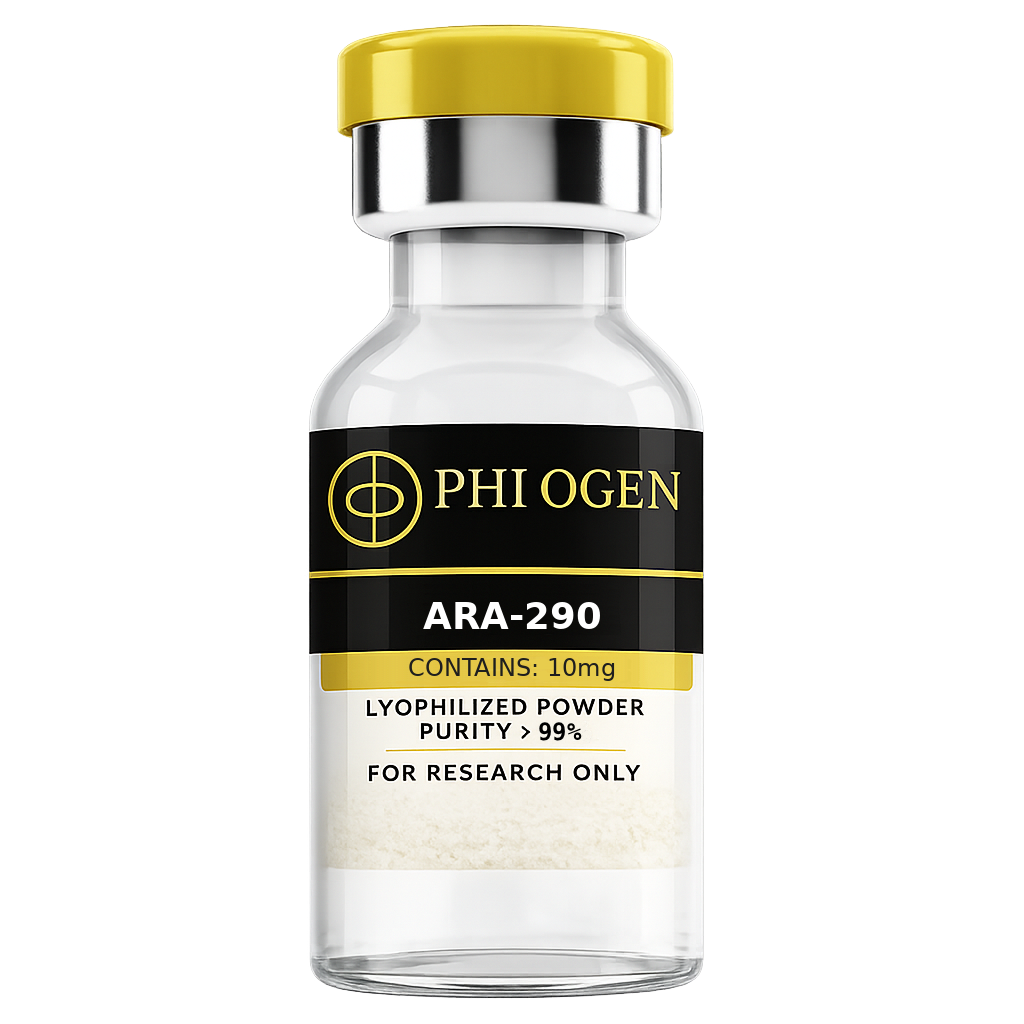
ARA-290 10mg
Erythropoietin tissue protective peptide — nerve repair and anti-inflammation.
2×
Faster tissue repair
6–10wk
Standard protocol
5★
Evidence rating
Buy verified ARA-290 10mg. 98.7% purity. Erythropoietin-derived peptide with tissue protective and neuroprotective effects without erythropoietic activity.
Research Grade · HPLC Tested
$80.99
$89.99
10% OFFHPLC tested · COA included
Order NowEPO Without Doping Risk
ARA-290 isolates EPO's tissue-protective EPOR/βcR receptor activation from erythropoiesis — delivering neuroprotection without any blood-thickening or hematopoietic effects.
Objective Nerve Regeneration
Phase 2 trials showed measurable corneal nerve fiber density increases — rare evidence of actual nerve repair rather than symptomatic management.
Phase 2 Diabetic Neuropathy Data
Significant pain reduction and nerve density improvement in a condition with essentially no disease-modifying alternatives.
ARA-290: Tissue Protective Peptide Protocol
Mechanism · Evidence · Application
ARA-290 is a synthetic peptide engineered from the helix B region of erythropoietin (EPO) — specifically the 11-amino acid sequence that activates EPO's tissue-protective receptor complex without triggering the erythropoietic effects that make EPO dangerous as a doping agent. By isolating the tissue-protective signaling arm of EPO from its red-blood-cell-stimulating arm, ARA-290 delivers neuroprotection, anti-inflammation, and tissue repair without any blood-thickening risk.
The Two Faces of Erythropoietin
Erythropoietin (EPO) is well known as the "blood doping" hormone — it stimulates red blood cell production (erythropoiesis) by binding the homodimeric EPOR (EPO receptor) on erythroid progenitor cells in bone marrow. This is EPO's erythropoietic function, and it is responsible for both EPO's therapeutic role in anemia and its abuse in endurance sports.
However, EPO has a completely separate tissue-protective function: it binds a heterodimeric receptor complex (EPOR/βcR — EPO receptor paired with the beta common receptor, also known as CD131) in non-hematopoietic tissues. This receptor complex, expressed in neurons, cardiac tissue, kidney, retina, and immune cells, mediates EPO's anti-apoptotic, anti-inflammatory, and tissue-repair effects.
ARA-290 (also known as Cibinetide) was designed specifically to activate only the EPOR/βcR complex — it has minimal affinity for the homodimeric EPOR that drives erythropoiesis. This selectivity provides all of EPO's protective benefits with none of its blood-thickening risks.
Neuroprotective Applications: Diabetic Neuropathy
ARA-290's most clinically developed application is peripheral neuropathy — particularly the pain and nerve damage associated with diabetes and other metabolic conditions. Phase 2 clinical trials showed: - Significant reduction in neuropathic pain scores - Improvements in corneal nerve fiber density (measurable nerve regeneration) - Reduction in small-fiber neuropathy measures - The corneal nerve data is particularly significant — it provides objective evidence of actual nerve repair rather than just symptomatic pain relief
Peripheral neuropathy affects >30 million Americans and has essentially no disease-modifying treatments — existing medications only manage symptoms. ARA-290 is among the few compounds showing objective nerve regeneration in clinical trials.
Anti-Inflammatory Mechanism
EPOR/βcR activation by ARA-290 produces: - Reduction of NF-κB activation (the master inflammatory transcription factor) - Decreased pro-inflammatory cytokine production (IL-6, TNF-α, IL-1β) - Increased anti-inflammatory IL-10 - Activation of Jak2/STAT3 protective signaling in injured cells - Inhibition of apoptosis in neurons, cardiomyocytes, and renal cells under stress
This anti-inflammatory and anti-apoptotic profile makes ARA-290 broadly relevant for any condition involving tissue damage from inflammation or ischemia.
Cardiac Protection
Cardiac EPOR/βcR activation provides cardioprotection in ischemia/reperfusion models — similar to the mechanism of hexarelin (which activates GHS-R1a on cardiac tissue). ARA-290's cardiac protection adds another dimension to its tissue-protective applications beyond neuropathy.
Research Status
ARA-290 is being developed by Araim Pharmaceuticals and has completed Phase 2 trials for diabetic neuropathy and sarcoidosis-associated small-fiber neuropathy. Phase 3 trials are in planning stages. The sarcoidosis data showed significant improvements in corneal nerve density and pain — conditions with extremely limited treatment options.
Healing & Repair Benefits
Activates EPO tissue-protective receptor (EPOR/βcR) without erythropoietic effects — no blood-thickening risk
Phase 2: objective corneal nerve fiber density improvement — measurable nerve regeneration, not just pain relief
Significant neuropathic pain reduction in diabetic and sarcoidosis-associated neuropathy trials
Anti-apoptotic in neurons, cardiomyocytes, and renal cells under ischemic stress
Reduces NF-κB, IL-6, TNF-α, and IL-1β — broad anti-inflammatory profile
Activates Jak2/STAT3 protective signaling across multiple tissue types
Cardiac protection in ischemia/reperfusion models through EPOR/βcR cardiac expression
Small-fiber neuropathy improvement — a condition with essentially no other disease-modifying options
98.7% purity with Certificate of Analysis
Dosing & Protocol Guide
ARA-290 10mg Protocol Guide
ARA-290 Neuroprotective Protocol:
· Dose: 4mg subcutaneous daily
· Route: Subcutaneous injection (abdomen or thigh)
· Duration: 8–12 weeks minimum for nerve regeneration assessment
· Frequency: Daily (Phase 2 reference protocol)
Neuropathy Protocol:
· 4mg daily for 8 weeks
· Assess pain scores and nerve function at 4-week intervals
· Corneal nerve density changes (if measurable) typically evident at 8+ weeks
· Continue 12–24 weeks for maximum nerve repair response
Anti-Inflammatory Stack:
· ARA-290 4mg daily (tissue protection and nerve repair)
· BPC-157 250mcg 2× daily (systemic angiogenesis and healing cascade)
· TB-500 2.5mg twice weekly (anti-fibrotic and anti-inflammatory)
This combination provides overlapping coverage across neuroprotection, vascular repair, and anti-inflammation
Reconstitution:
· Reconstitute with bacteriostatic water
· 4mg/mL — standard 1mL daily injection
Healing & Recovery
Erythropoietin tissue protective peptide — nerve repair and anti-inflammation.
Quality Assurance
HPLC Testing
Purity verified per batch
Mass Spectrometry
Molecular identity confirmed
Certificate of Analysis
Publicly available
US-Based Supplier
HPLC + Mass Spec Verified
Synergistic Combinations
Stack ARA-290 10mg With
Ready to Start?
Begin your ARA-290 10mg protocol
HPLC-tested and mass-spectrometry verified, with a Certificate of Analysis for every batch.
Get ARA-290 10mg