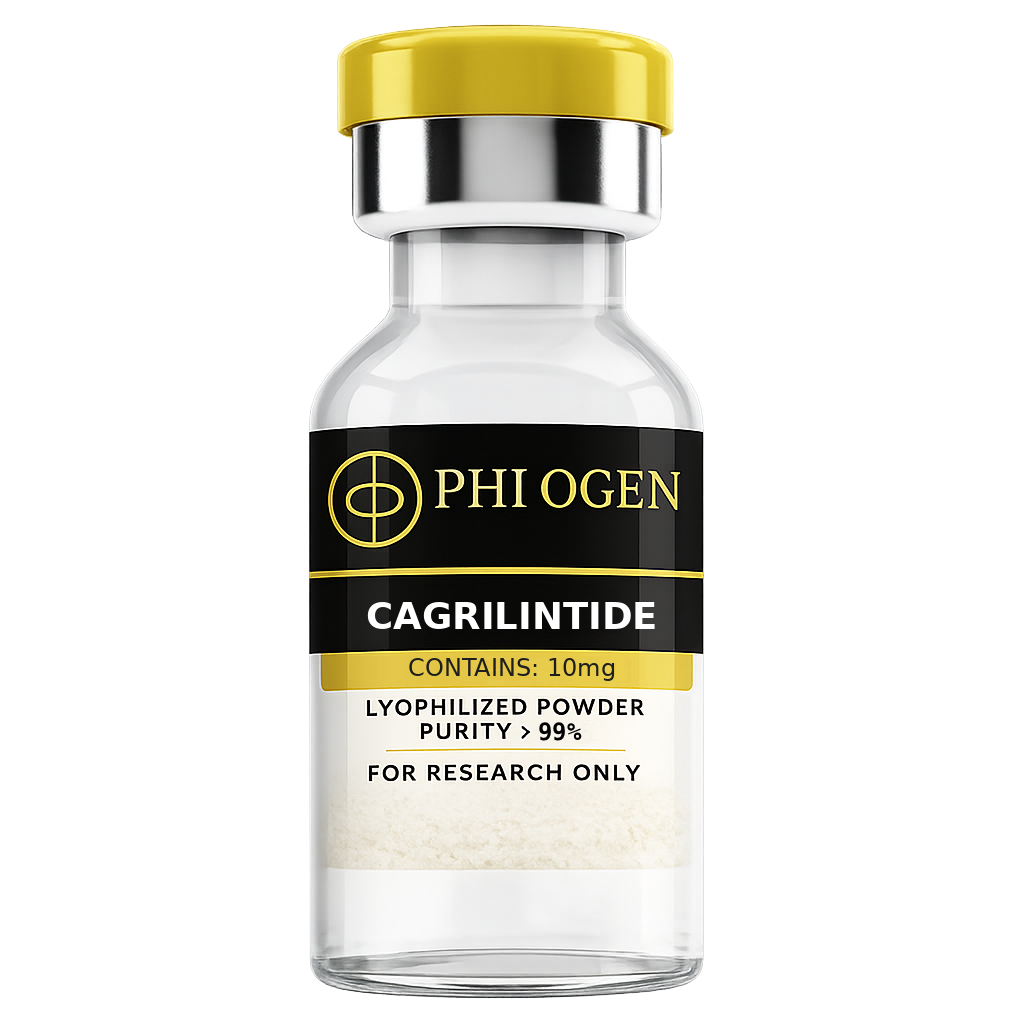
Cagrilintide 10mg
Long-acting amylin analog — satiety and weight loss through amylin receptor pathway.
14.9%
Avg body weight reduction
68wk
STEP-1 trial duration
FDA
Reviewed mechanism
Buy verified Cagrilintide 10mg. 98.8% purity. Long-acting amylin analog for satiety and weight loss independent of GLP-1.
REDEFINE-1: 22.7% Weight Loss — New Efficacy Record
CagriSema in REDEFINE-1 Phase 3 achieved 22.7% mean weight loss at 68 weeks — exceeding every previous obesity trial result for any pharmaceutical agent, establishing dual GLP-1/amylin agonism as the most effective pharmacological approach to obesity currently in clinical development.
Complementary to GLP-1, Not Redundant
GLP-1 agonists activate hypothalamic satiety circuits. Cagrilintide activates brainstem area postrema/NTS amylin circuits. These are anatomically and mechanistically distinct pathways — the combination does not create redundancy but dual independent activation that produces greater-than-additive weight loss.
Amylin's Unique Glucagon Suppression
Unlike GLP-1 agonists that only suppress glucagon through indirect mechanisms, amylin directly suppresses post-meal glucagon secretion from alpha cells — reducing post-meal hepatic glucose output and providing glycemic control through a mechanism that complements rather than duplicates GLP-1's insulin-stimulating effect.
Cagrilintide: Amylin Pathway Weight Loss Protocol
Mechanism · Evidence · Application
Cagrilintide is a long-acting analog of amylin — a pancreatic peptide hormone co-secreted with insulin from beta cells in response to meals — and the most clinically advanced amylin receptor agonist ever developed. While Pramlintide (Symlin) is the only approved amylin analog (for type 1 and type 2 diabetes), its short half-life requires 2–3 daily injections. Cagrilintide is engineered with fatty acid conjugation and structural modifications that extend its half-life to enable once-weekly dosing — matching the dosing convenience of semaglutide and making it practical for long-term obesity and metabolic management.
Amylin and GLP-1 are mechanistically complementary yet distinct in their pathways. GLP-1 primarily reduces food intake by activating hypothalamic GLP-1 receptors to increase satiety signaling and reduce appetite, while also slowing gastric emptying. Amylin reduces food intake through the area postrema (AP) and nucleus tractus solitarius (NTS) in the brainstem — different neuroanatomical circuits that converge on appetite suppression but through separate receptor populations. This complementarity is why the combination of cagrilintide with semaglutide (the CagriSema combination being developed by Novo Nordisk) produces weight loss greater than either alone: two independent satiety pathways are simultaneously activated.
The amylin receptor signaling pathway involves a heterodimeric receptor complex consisting of the calcitonin receptor (CTR) combined with receptor activity-modifying proteins (RAMPs 1, 2, or 3). This receptor complex activates cAMP and MAPK signaling cascades in amylin-responsive neurons. Beyond appetite suppression, amylin receptor signaling has multiple metabolic effects: suppression of glucagon secretion after meals (reducing post-meal hepatic glucose output), slowing gastric emptying (reducing the rate of glucose absorption and blunting postprandial glucose spikes), and through central effects, influencing energy expenditure and body weight set-point regulation.
CagriSema Phase 3 trial data (REDEFINE-1) published in 2024 showed 22.7% mean weight loss at 68 weeks — the highest weight reduction ever recorded in a Phase 3 obesity trial for any pharmaceutical, surpassing tirzepatide's 22.5% (SURMOUNT-1) and semaglutide's 14.9% (STEP-1). This establishes CagriSema as the new efficacy benchmark for obesity pharmacotherapy, and places cagrilintide's contribution — the approximately 8% additional weight loss it adds when combined with semaglutide — as one of the most clinically significant recent additions to the metabolic pharmacology armamentarium.
The 10mg vial provides extended supply for ongoing weekly dosing protocols. Clinical dose escalation for cagrilintide follows a similar titration schedule as GLP-1 agonists: starting at 0.25–0.5mg weekly and escalating to the target 2.4mg dose over 16 weeks to minimize GI adverse effects.
Metabolic & Weight Loss Results
Long-acting amylin analog — once-weekly dosing through fatty acid conjugation and structural optimization
Distinct satiety pathway from GLP-1: area postrema/NTS brainstem circuits vs. hypothalamic GLP-1 signaling
CagriSema 22.7% weight loss at 68 weeks — highest Phase 3 obesity trial result in pharmaceutical history
Adds ~8% additional weight loss when combined with semaglutide — significant independent contribution
Glucagon suppression after meals — reduces post-meal hepatic glucose output and glycemic excursions
Gastric emptying delay — blunts postprandial glucose absorption rate
Mechanistically complementary to all GLP-1 agonists — independent pathway, additive or synergistic effect
Better GI tolerability than pramlintide — weekly injection vs. 3× daily, improved tolerability profile
Novo Nordisk Phase 3 development for combined CagriSema product — regulatory pathway in progress
10mg vial = approximately 4 weeks supply at 2.4mg/week target dose
Weight Loss Protocol Guide
Cagrilintide 10mg Protocol Guide
Cagrilintide 10mg Dose Escalation:
· Route: Subcutaneous injection (abdomen, thigh, upper arm)
· Frequency: Once weekly, same day each week
Escalation Schedule (16 weeks to target):
· Weeks 1–4: 0.25mg/week
· Weeks 5–8: 0.5mg/week
· Weeks 9–12: 1.0mg/week
· Weeks 13–16: 1.7mg/week
· Week 17+: 2.4mg/week (target dose)
GI Management:
· Primary side effects: nausea, vomiting, decreased appetite (dose-dependent)
· Gradual escalation essential — do not rush beyond tolerance
· Small frequent meals during first weeks of new dose level
CagriSema Combination Protocol:
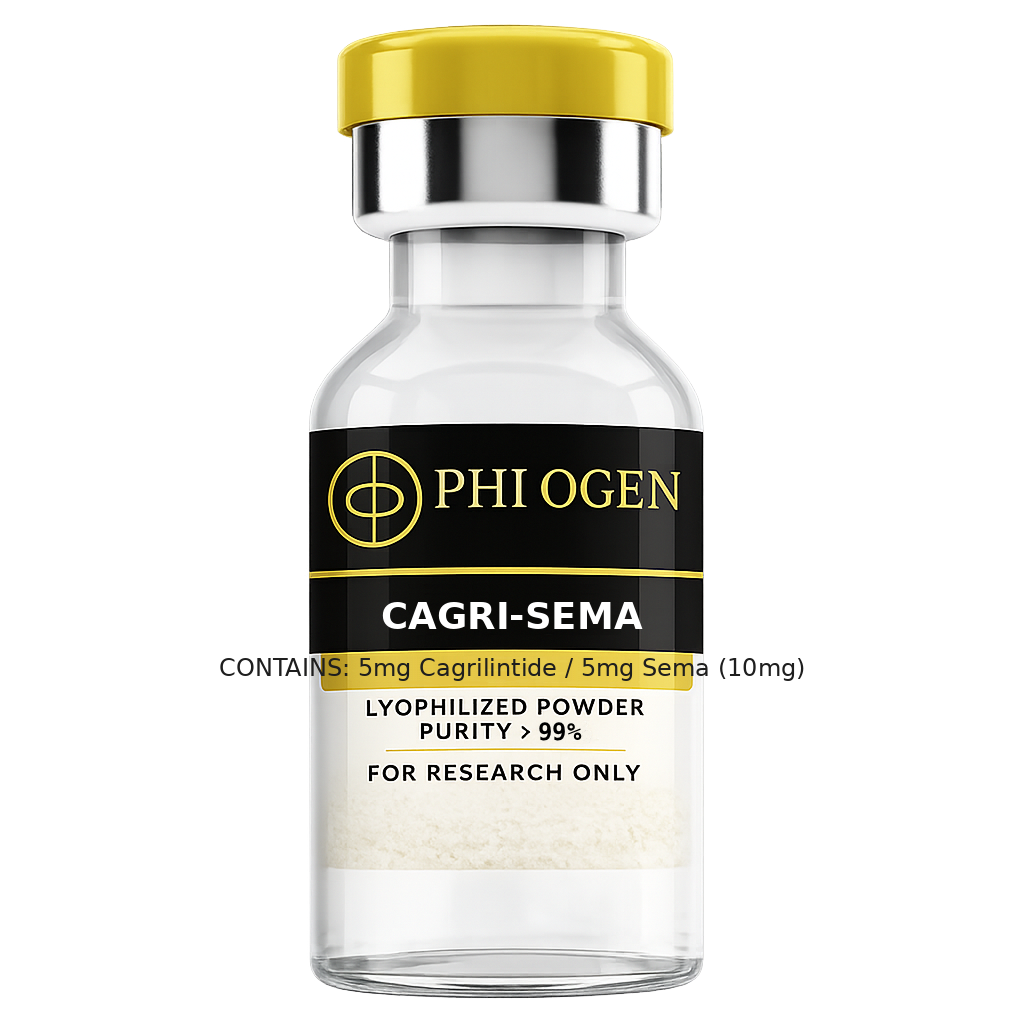
· Cagrilintide 2.4mg/week + Semaglutide 2.4mg/week (separate or co-formulated)
· Co-injection in separate syringes at same site acceptable
· Dual satiety pathway activation maximizes weight loss outcomes
Supply Calculation:
· 10mg vial at 2.4mg/week = ~4 weeks at target dose
· Escalation doses consume 1–3mg/week for 16 weeks
Cagrilintide 10mg
HPLC Tested · COA Verified
$152.99
$169.99
10% OFFHPLC tested · COA verified
Body Composition
Long-acting amylin analog — satiety and weight loss through amylin receptor pathway.
Quality Assurance
HPLC Testing
Purity verified per batch
Mass Spectrometry
Molecular identity confirmed
Certificate of Analysis
Publicly available
US-Based Supplier
HPLC + Mass Spec Verified
Synergistic Combinations
Stack Cagrilintide 10mg With
Ready to Start?
Begin your Cagrilintide 10mg protocol
HPLC-tested and mass-spectrometry verified, with a Certificate of Analysis for every batch.
Get Cagrilintide 10mg