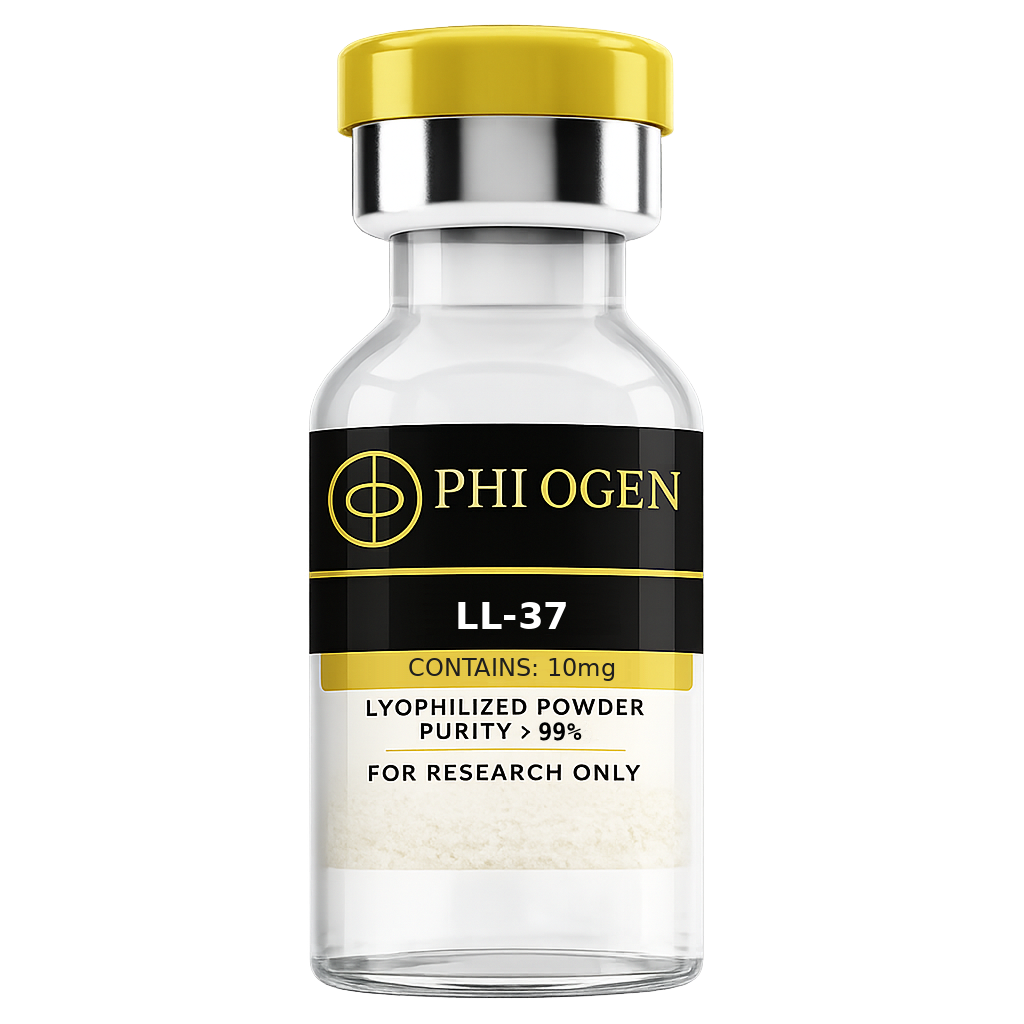
LL-37 10mg
Human antimicrobial peptide — immune defense, wound healing, and anti-biofilm.
2×
Faster tissue repair
6–10wk
Standard protocol
5★
Evidence rating
Buy verified LL-37 10mg. 98.8% purity. The only human cathelicidin antimicrobial peptide — broad-spectrum antimicrobial, immune modulating, and wound healing.
Research Grade · HPLC Tested
$89.99
$99.99
10% OFFHPLC tested · COA included
Order NowOnly Human Cathelicidin
LL-37 is the sole human cathelicidin — the body's own broad-spectrum first-line antimicrobial peptide present in every mucosal surface.
Biofilm Disruption
Breaks down bacterial biofilms at concentrations far below conventional antibiotics — critical for MRSA, Pseudomonas, and chronic wound infections.
Beyond Killing
Simultaneously kills pathogens, stimulates wound healing, recruits immune cells, and modulates inflammation — a complete antimicrobial immune response molecule.
LL-37: Antimicrobial and Immune Protocol
Mechanism · Evidence · Application
LL-37 is the only known human cathelicidin — a 37-amino acid cationic antimicrobial peptide that serves as one of the most important first-line defense molecules in human innate immunity. Unlike conventional antibiotics that target specific bacterial pathways, LL-37 works through a fundamentally different mechanism: it physically disrupts the lipid membranes of pathogens, making resistance development significantly more difficult. It also disrupts bacterial biofilms — the protective matrix that shields antibiotic-resistant bacterial communities.
Human Cathelicidin: The Innate Defense Peptide
Cathelicidins are a family of antimicrobial peptides produced as part of the innate immune response. While many mammals have multiple cathelicidins, humans express only one: hCAP-18, which is proteolytically cleaved to release the active LL-37 C-terminal peptide. LL-37 is produced by neutrophils, macrophages, mast cells, NK cells, epithelial cells of the skin, gut, respiratory tract, and genital mucosa.
LL-37 is among the most rapidly mobilized antimicrobial defenses — it is stored in granules ready for immediate release upon detection of pathogen-associated molecular patterns. Its expression is also induced by vitamin D, making vitamin D deficiency a factor in reduced LL-37 expression and increased infection susceptibility.
Antimicrobial Mechanism: Membrane Disruption
LL-37's antimicrobial activity works through electrostatic attraction and membrane insertion: 1. The peptide's cationic charges (positive) are attracted to the anionic (negative) surface of bacterial and fungal membranes 2. LL-37 inserts into the lipid bilayer and adopts an amphipathic helical structure 3. This helical insertion disrupts membrane integrity — creating pores or detergent-like solubilization of the membrane 4. Bacterial and fungal cell contents leak out, causing rapid death
This membrane-disruptive mechanism is effective against: - Gram-positive bacteria (Staphylococcus aureus, including MRSA) - Gram-negative bacteria (E. coli, Pseudomonas aeruginosa) - Fungal pathogens (Candida species) - Enveloped viruses (HIV, influenza, herpes)
Biofilm Disruption: The Critical Advantage
Biofilms are communities of bacteria encased in a self-produced extracellular polysaccharide matrix that dramatically reduces antibiotic penetration. Chronic wound infections, implant-associated infections, and many recurrent bacterial infections involve biofilms that resist conventional antibiotics at 100–1000× normal concentrations.
LL-37 disrupts biofilm architecture through: - Inhibition of initial biofilm formation (binding to bacterial surfaces and preventing adherence) - Penetration through the extracellular matrix — enabled by LL-37's amphipathic structure and positive charge - Direct bacterial killing within the biofilm - Reduction of quorum sensing signals that coordinate biofilm behavior
This anti-biofilm activity is increasingly recognized as one of LL-37's most clinically important properties.
Immune Modulation Beyond Killing
LL-37 does more than kill pathogens — it is a central immune modulatory signal: - Promotes chemotaxis of monocytes, neutrophils, and T-cells to sites of infection - Activates dendritic cells, enhancing adaptive immune response initiation - Promotes angiogenesis for wound vascularization - Stimulates keratinocyte migration and proliferation for wound re-epithelialization - Modulates inflammatory cytokine production in context-dependent ways (pro-inflammatory in early infection; anti-inflammatory in resolution phase)
Healing & Repair Benefits
Only human cathelicidin — the most fundamental first-line antimicrobial defense peptide in innate immunity
Broad-spectrum antimicrobial: kills MRSA, E. coli, Pseudomonas, Candida, and enveloped viruses
Membrane disruption mechanism — pathogen resistance development is significantly harder than with conventional antibiotics
Disrupts bacterial biofilms at concentrations far below what conventional antibiotics require
Anti-biofilm activity against MRSA and Pseudomonas — important for chronic wound and implant infections
Promotes wound healing through angiogenesis stimulation and keratinocyte migration
Immune modulation: recruits neutrophils, monocytes, and T-cells to infection sites
Activates dendritic cells — bridges innate and adaptive immune responses
Vitamin D-dependent expression — LL-37 deficiency links to vitamin D deficiency and infection susceptibility
98.8% purity with Certificate of Analysis
Dosing & Protocol Guide
LL-37 10mg Protocol Guide
LL-37 Wound and Infection Protocol:
· Dose: 100–500mcg per application (locally) or 500mcg–1mg systemically
· Local wound: Direct injection into wound margins or topical application
· Subcutaneous: 500mcg–1mg once or twice daily for systemic immune support
· Duration: Until wound healing/infection resolution, typically 4–8 weeks
Topical Application:
· Dissolve in sterile saline at 0.5–1mg/mL
· Apply directly to wound surface 1–2× daily
· Cover with sterile dressing; change with each application
· Particularly effective for biofilm-associated chronic wounds
Immune Support Protocol:
· 500mcg subcutaneous 2–3× weekly for systemic innate immune enhancement
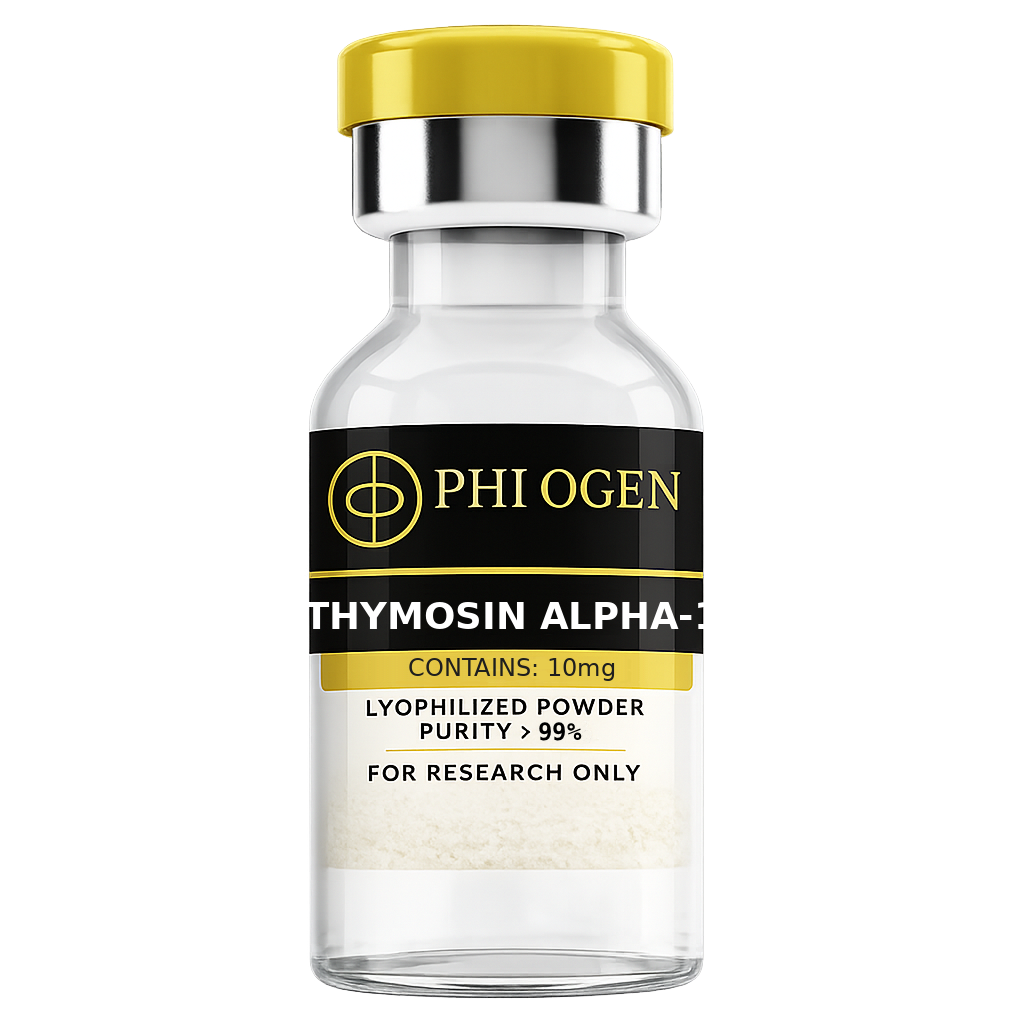
· Stack with Thymosin Alpha-1 1.6mg 2× weekly for adaptive immune support
· This combination covers both innate (LL-37) and adaptive (Thymosin Alpha-1) immune axes
MRSA/Resistant Infection Context:
· Local injection: 250–500mcg directly at infection site
· Multiple daily applications may be required
· LL-37 works regardless of antibiotic resistance patterns — complementary to antibiotic therapy
Healing & Recovery
Human antimicrobial peptide — immune defense, wound healing, and anti-biofilm.
Quality Assurance
HPLC Testing
Purity verified per batch
Mass Spectrometry
Molecular identity confirmed
Certificate of Analysis
Publicly available
US-Based Supplier
HPLC + Mass Spec Verified
Synergistic Combinations
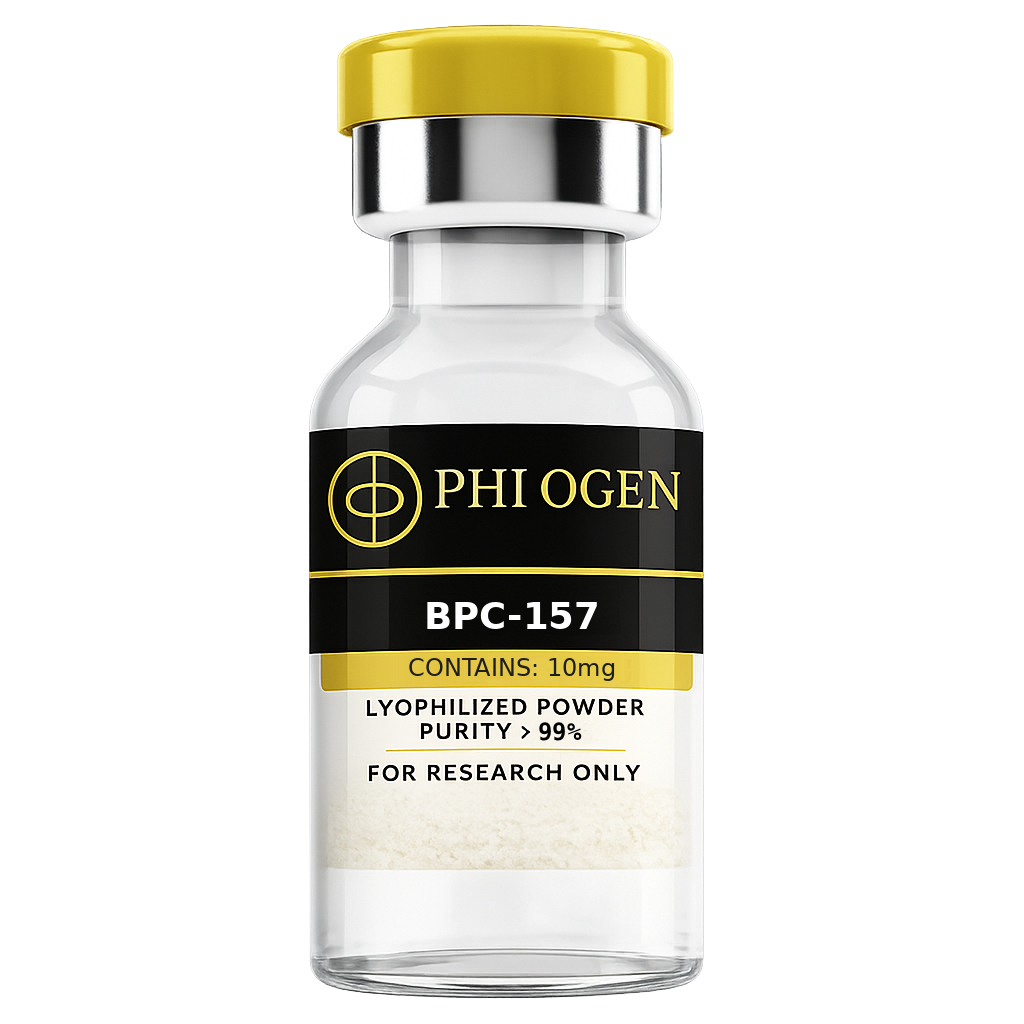
Stack LL-37 10mg With
Ready to Start?
Begin your LL-37 10mg protocol
HPLC-tested and mass-spectrometry verified, with a Certificate of Analysis for every batch.
Get LL-37 10mg