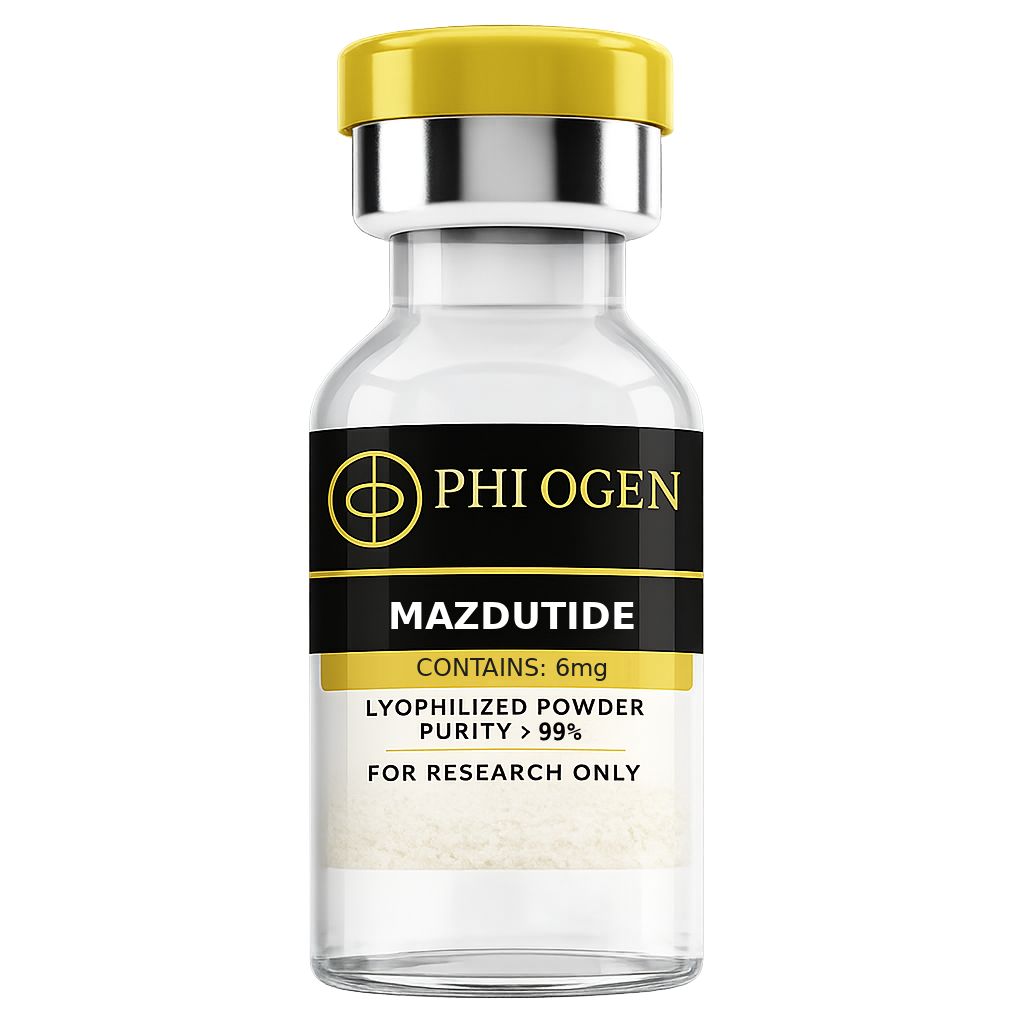
Mazdutide 6mg
GLP-1/Glucagon dual agonist — weight loss and MASH liver disease treatment.
14.9%
Avg body weight reduction
68wk
STEP-1 trial duration
FDA
Reviewed mechanism
Buy verified Mazdutide 6mg. 98.7% purity. GLP-1/Glucagon dual agonist with strong liver fat reduction data.
Hepatic Fat Target Beyond GLP-1
Mazdutide's glucagon receptor component drives hepatic lipolysis — producing greater liver fat reduction than GLP-1 monotherapy, directly addressing NAFLD/NASH that co-exists in the majority of the obese metabolic syndrome population this drug targets.
SAIL Technology Stability Engineering
Innovent's SAIL (Structured Amide Insertion Ligation) technology improves mazdutide's protease resistance and pharmacokinetic profile — enabling once-weekly dosing through molecular engineering rather than fatty acid conjugation like semaglutide.
Phase 3 in Asian Metabolic Syndrome
Mazdutide is the most advanced GLP-1/glucagon dual agonist specifically developed for Asian obesity and T2D populations — where high NAFLD prevalence and distinct metabolic phenotypes make the glucagon-mediated hepatic component particularly relevant.
Mazdutide: Dual Agonist Protocol
Mechanism · Evidence · Application
Mazdutide (IBI362, OXM3) is a GLP-1/Glucagon dual agonist being developed by Innovent Biologics primarily for the Chinese and Asian patient populations, where it has undergone extensive Phase 2 and Phase 3 clinical investigation for both obesity and type 2 diabetes management. Its dual receptor mechanism mirrors survodutide's pharmacological approach — GLP-1 receptor agonism for appetite suppression and insulin secretion paired with glucagon receptor agonism for hepatic fat mobilization and thermogenesis — but with a distinct molecular structure and development profile optimized through Innovent's SAIL (Structured Amide Insertion Ligation) technology.
The pharmacological rationale for GLP-1/Glucagon dual agonism in mazdutide is the same mechanistic advantage shared across this class: glucagon receptor agonism contributes benefits that GLP-1 alone cannot provide. Glucagon drives hepatic lipolysis — increasing fatty acid oxidation and reducing hepatic triglyceride content — which is directly relevant to the high prevalence of non-alcoholic fatty liver disease (NAFLD) in the metabolic syndrome population that most benefits from GLP-1-based therapy. Glucagon also activates brown adipose tissue (BAT) thermogenesis through β-3 adrenergic and sympathetic nervous system cross-talk, increasing energy expenditure beyond the appetite suppression mediated by GLP-1. Together, these mechanisms produce a more favorable metabolic shift than GLP-1 monotherapy.
Phase 2 clinical data for mazdutide in Chinese patients with obesity demonstrated weight reductions of 10–14% over 24 weeks at optimal doses — highly significant for a Phase 2 duration and consistent with the GLP-1/glucagon dual agonist class. Importantly, mazdutide showed significant HbA1c reduction alongside weight loss, confirming the GLP-1 component's glycemic efficacy. Phase 3 trials (GLORY program) are ongoing for both obesity and T2D indications in China, with potential for broader global regulatory applications pending those outcomes.
The distinction from semaglutide lies in the glucagon component and its hepatic metabolic effects. Head-to-head comparisons in animal models and Phase 2 human data suggest GLP-1/glucagon dual agonists produce greater reduction in liver fat than GLP-1 monotherapy — a clinically meaningful differentiator given the extremely high NAFLD/NASH prevalence in the obese metabolic syndrome population. This hepatic dimension may ultimately drive mazdutide's adoption as a preferred agent in populations where metabolic liver disease is a co-primary therapeutic target alongside weight management.
The SAIL technology used in mazdutide's engineering improves protease stability and extends half-life through structured molecular modifications — addressing one of the key pharmaceutical challenges in peptide drug development (enzymatic degradation). This technical improvement contributes to the once-weekly dosing profile that makes mazdutide practical for long-term obesity management.
Research compound reflecting late-stage clinical development. Weekly subcutaneous injection, dose escalation from 1.2mg to 6mg target dose per clinical trial protocols.
Metabolic & Weight Loss Results
GLP-1/Glucagon dual agonism — appetite suppression plus hepatic fat mobilization and thermogenesis
10–14% weight reduction at 24 weeks in Phase 2 Chinese obesity population
Significant HbA1c reduction alongside weight loss — combined glycemic and metabolic efficacy
Greater hepatic fat reduction than GLP-1 monotherapy — glucagon-mediated hepatic lipolysis advantage
BAT thermogenesis activation — increased energy expenditure beyond appetite suppression
Phase 3 GLORY program ongoing — most advanced GLP-1/glucagon dual agonist in Chinese regulatory pathway
SAIL technology engineering for protease stability and weekly dosing pharmacokinetics
Particularly relevant for metabolic syndrome with co-prevalent NAFLD/NASH
Once-weekly subcutaneous injection — equivalent administration convenience to semaglutide
Mechanistically distinct from tirzepatide (GLP-1/GIP) — different dual receptor combination and metabolic profile
Weight Loss Protocol Guide
Mazdutide 6mg Protocol Guide
Research Protocol — Mazdutide:
· Route: Subcutaneous injection
· Frequency: Once weekly
· Dose escalation: 1.2mg → 2.4mg → 3.6mg → 4.8mg → 6mg (escalate every 4 weeks per tolerance)
· Target dose: 6mg/week (Phase 3 primary dose)
GI Tolerability:
· Nausea, decreased appetite, vomiting are primary adverse effects (GLP-1 class effect)
· Gradual dose escalation essential — do not rush escalation
· Most GI effects diminish after 4–6 weeks at stable dose
Clinical Context:
· Developed primarily for Asian/Chinese patient populations with high NAFLD co-prevalence
· Phase 3 data expected 2025–2026 for obesity and T2D Chinese indications
Stacking:
· Not recommended to combine with other GLP-1 or glucagon agonists
· AICAR or MOTS-c may complement metabolic effects through AMPK pathway
Monitoring:
· Weight (weekly), waist circumference (monthly)
· Liver enzymes (ALT, AST) and imaging for NAFLD monitoring
· HbA1c and fasting glucose for glycemic tracking
Body Composition
GLP-1/Glucagon dual agonist — weight loss and MASH liver disease treatment.
Quality Assurance
HPLC Testing
Purity verified per batch
Mass Spectrometry
Molecular identity confirmed
Certificate of Analysis
Publicly available
US-Based Supplier
HPLC + Mass Spec Verified
Synergistic Combinations
Stack Mazdutide 6mg With
Ready to Start?
Begin your Mazdutide 6mg protocol
HPLC-tested and mass-spectrometry verified, with a Certificate of Analysis for every batch.
Get Mazdutide 6mg