Oxytocin 10mg
Love hormone — social bonding, stress reduction, and cognitive effects.
High
Purity verified
COA
Batch certified
US
US supplier
Buy verified Oxytocin 10mg. 99.0% purity. The "love hormone" — modulates social behavior, reduces anxiety, and has cognitive and cardiovascular benefits.
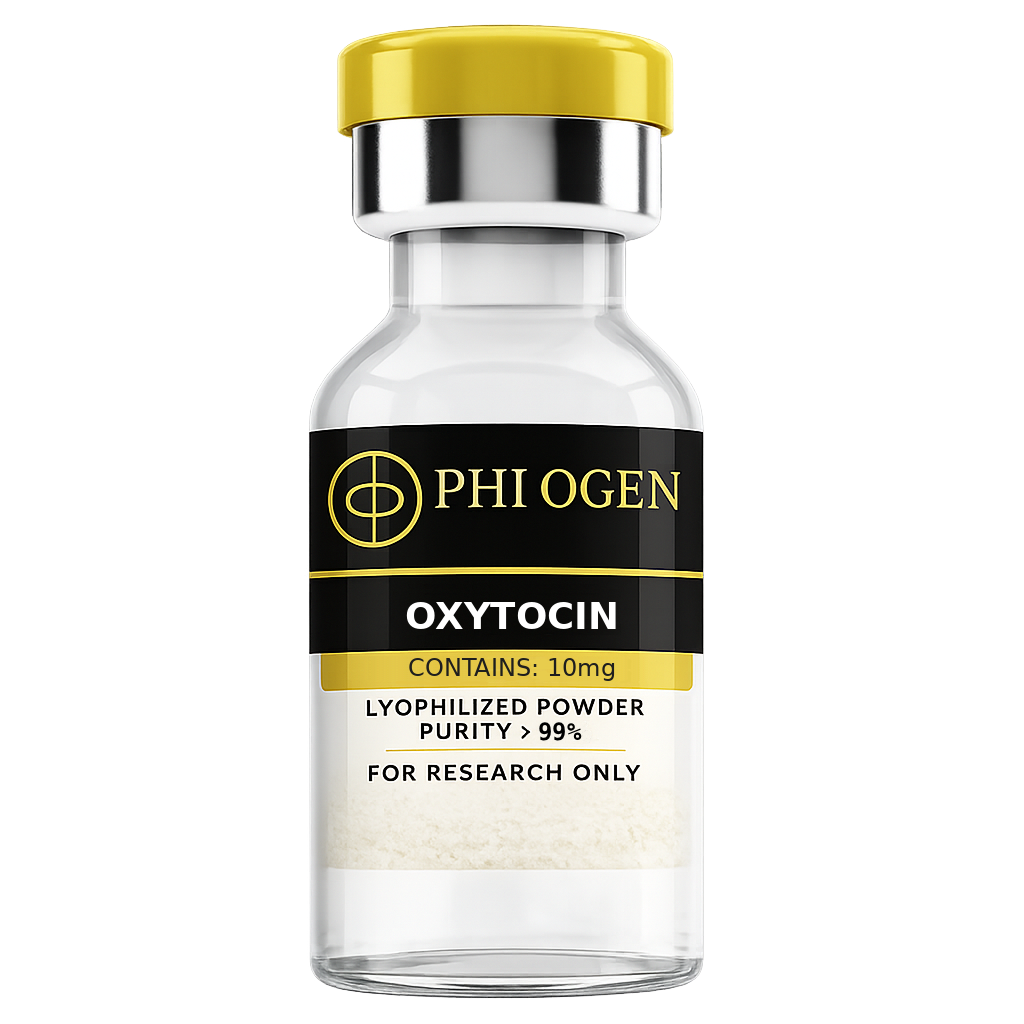
Research Grade · HPLC Tested
$71.99
$79.99
10% OFFHPLC tested · COA included
Order NowThe Trust Hormone
Oxytocin's nucleus accumbens and amygdala receptor activation simultaneously increases social reward value and reduces threat reactivity — producing the prosocial bonding state that underlies trust, empathy, and social connection through neurochemistry rather than behavioral choice.
Amygdala Reactivity Reduction
OXTR activation in the amygdala reduces hyperreactive threat processing — the mechanism underlying anxiety, social hypervigilance, and the fight-flight activation that impairs social function in anxiety disorders and PTSD. This is the most pharmacologically direct amygdala anxiolytic mechanism available.
Metabolic and Immune Dimensions
Beyond its famous social effects, oxytocin receptors in the hypothalamus and gut regulate appetite and energy balance (OXTR activation reduces food intake), while peripheral OXTR activation reduces inflammatory cytokine production — making oxytocin one of the most functionally diverse neuropeptides with clinical potential across multiple organ systems.
Oxytocin: Social and Stress Modulation Protocol
Mechanism · Evidence · Application
Oxytocin is a 9-amino acid neuropeptide produced in the paraventricular and supraoptic nuclei of the hypothalamus — one of the most multifunctional neurochemical signaling molecules in mammalian biology. Originally characterized for its roles in parturition (uterine contraction at birth) and lactation (milk ejection), oxytocin is now understood to govern a remarkably broad range of social, emotional, and physiological functions: social bonding, trust, empathy, anxiety modulation, stress response calibration, pain perception, gut motility, immune regulation, and even metabolic function. The research expansion of our understanding of oxytocin beyond its reproductive roles has made it one of the most investigated peptides in contemporary neuroscience and psychiatry.
Oxytocin's social and emotional effects are mediated through widely distributed oxytocin receptor (OXTR) expression throughout the limbic system: amygdala, hippocampus, nucleus accumbens, cingulate cortex, and brainstem. Amygdala OXTR activation reduces threat response reactivity — the mechanism underlying oxytocin's established anxiolytic effects and its ability to reduce social anxiety and threat-related hypervigilance that impairs social function. Nucleus accumbens OXTR signaling modulates the reward value of social interactions — reinforcing prosocial behavior and social bonding through dopaminergic reward circuit engagement. Hippocampal OXTR activity supports memory consolidation for social information and spatial contexts.
The neuropsychiatric research applications of oxytocin have been extensive. Multiple Phase 2 trials have examined intranasal oxytocin for autism spectrum disorder (ASD) — motivated by the central role of social impairment in ASD and oxytocin's established prosocial effects. Results have been mixed in heterogeneous ASD populations, but show consistent effects in subgroups with more intact social motivation circuitry. PTSD trials have examined oxytocin for fear extinction enhancement and reduction of social hypervigilance — the amygdala-suppression mechanism directly relevant to PTSD's threat-response dysregulation. Social anxiety disorder (SAD) trials show more consistent positive effects from single oxytocin doses on social interaction quality and anxiety reduction.
Beyond psychiatric applications, oxytocin has received growing research attention for: metabolic effects (OXTR in the hypothalamus and gut regulate appetite and energy homeostasis; exogenous oxytocin reduces food intake in humans); anti-inflammatory effects (peripheral OXTR activation reduces pro-inflammatory cytokine production, with potential relevance to inflammatory pain and autoimmune conditions); and cardiovascular effects (oxytocin is cardioprotective in ischemia-reperfusion models through cardiac OXTR activation).
Intranasal oxytocin is the standard research administration route, providing effective CNS delivery through olfactory nerve pathways while minimizing peripheral effects from systemic injection. The 10mg vial provides approximately 40 research doses at standard 250mcg (4IU) intranasal doses. Protocol: 250–400mcg intranasal 15–30 minutes before social or cognitively demanding situations, or for sustained anxiolytic/prosocial effect protocols.
Evidence-Backed Benefits
Social bonding and prosocial behavior enhancement through limbic OXTR activation — the defining "trust hormone" effect
Anxiety reduction — amygdala OXTR activation reduces threat-response reactivity and social anxiety
Reduces social hypervigilance — directly relevant to social anxiety disorder and PTSD social avoidance
Fear extinction facilitation — enhances the extinction learning relevant to PTSD treatment
Nucleus accumbens reward circuit modulation — increases social interaction reward value
Anti-inflammatory peripheral effects — reduces pro-inflammatory cytokine production through peripheral OXTR
Metabolic appetite suppression — hypothalamic and gut OXTR signaling reduces food intake
Cardioprotective effects in ischemia-reperfusion models through cardiac OXTR activation
Intranasal route provides effective CNS delivery without systemic injection
One of the most extensively studied neuropeptides in psychiatry — enormous research evidence base
Dosing & Protocol Guide
Oxytocin 10mg Protocol Guide
Standard Oxytocin Protocol:
· Dose: 250–400mcg (4–8 IU) per intranasal administration
· Route: Intranasal
· Timing: 15–30 minutes before social situations or cognitive demand for acute effects
· Frequency: As-needed acute use; or daily for sustained anxiolytic protocol
Intranasal Administration:
· Reconstitute in bacteriostatic water (100mcg/mL for standard dosing)
· 250mcg into each nostril or split 400mcg across 2–3 applications
· Inhale gently after administration to distribute to olfactory epithelium
Social Anxiety Protocol:
· 250mcg 20–30 min before anxiety-provoking social interaction
· Effects: reduced amygdala reactivity, increased social fluency, reduced social hypervigilance
Research Applications:
· ASD social function studies (mixed evidence, but effect in motivation-intact subgroups)
· PTSD fear extinction enhancement (adjunct to exposure therapy protocols)
· Social anxiety disorder — most consistent evidence for single-dose anxiety reduction
Metabolic Protocol:
· 250mcg pre-meal for appetite suppression effect
· Combine with GLP-1 agonists for complementary appetite reduction mechanisms
Stacking:
· Oxytocin + Selank: dual anxiolytic pathways (GABAergic + oxytocinergic)
· Oxytocin + PT-141: prosocial bonding + libido enhancement — combined social intimacy support
Cognitive & Nootropic
Love hormone — social bonding, stress reduction, and cognitive effects.
Quality Assurance
HPLC Testing
Purity verified per batch
Mass Spectrometry
Molecular identity confirmed
Certificate of Analysis
Publicly available
US-Based Supplier
HPLC + Mass Spec Verified
Synergistic Combinations
Stack Oxytocin 10mg With
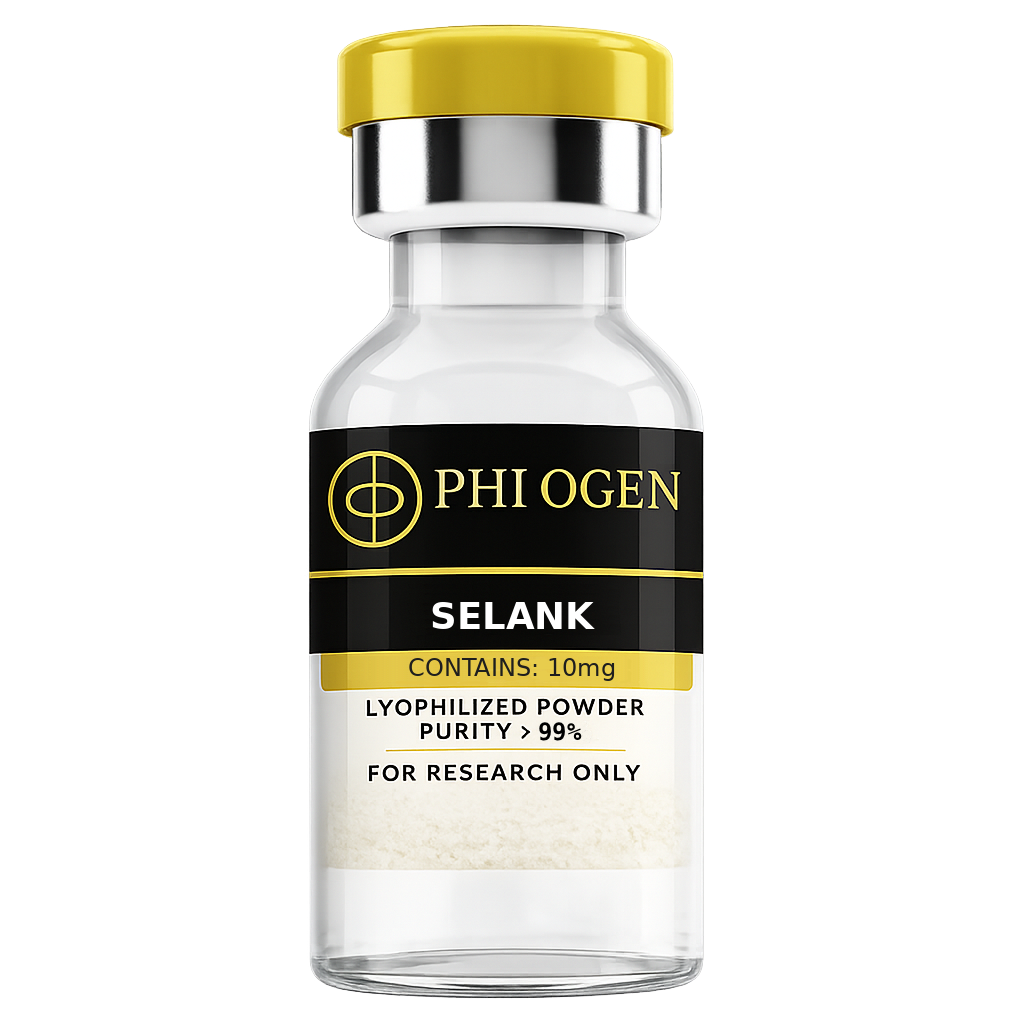
Ready to Start?
Begin your Oxytocin 10mg protocol
HPLC-tested and mass-spectrometry verified, with a Certificate of Analysis for every batch.
Get Oxytocin 10mg