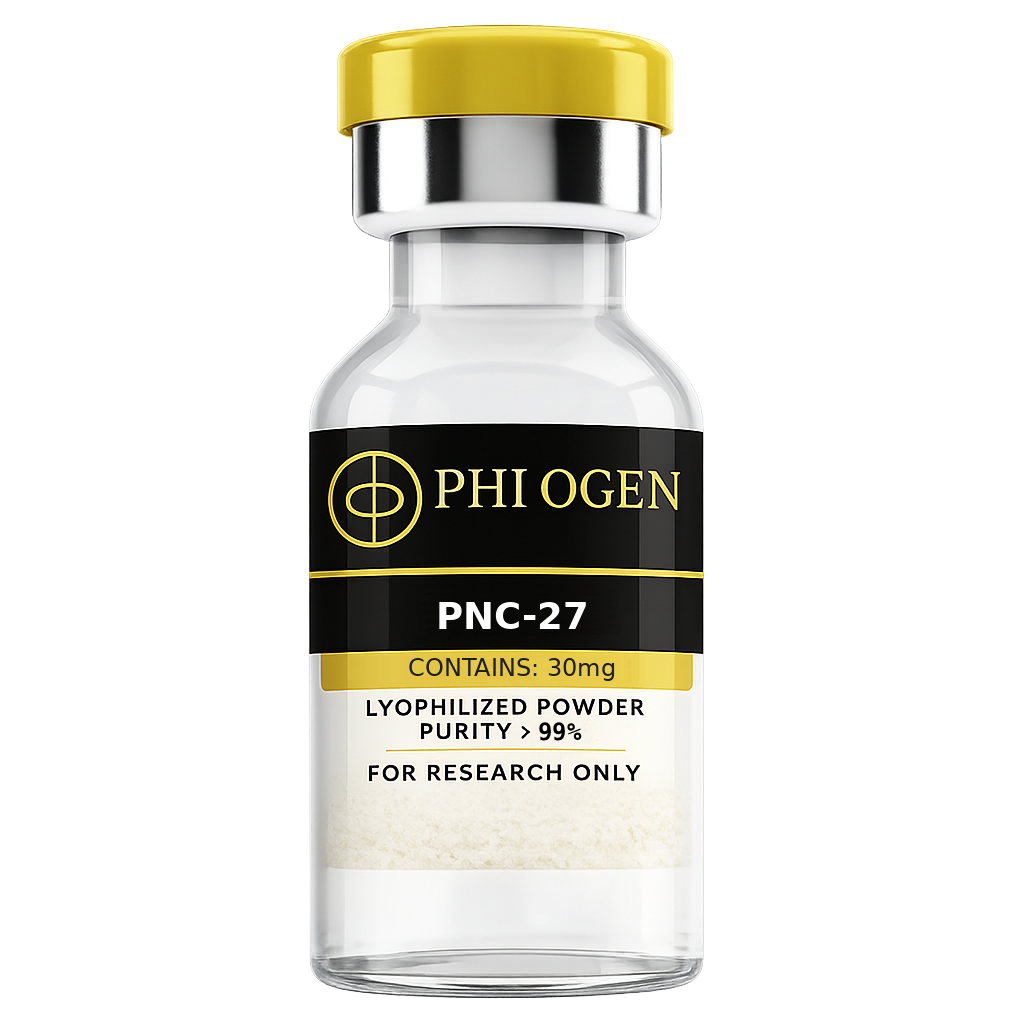
PNC-27 30mg
Anti-cancer peptide — selectively induces apoptosis in cancer cells.
Buy verified PNC-27 30mg. 98.5% purity. A p53 MDM-2 binding domain peptide that selectively induces apoptosis in cancer cells without affecting normal cells.
MDM-2 Membrane Expression Selectivity
PNC-27 targets MDM-2 expressed on the plasma membrane of cancer cells — a molecular feature not present on normal cells. This tumor-specific membrane MDM-2 targeting provides a selectivity mechanism that is fundamentally different from any chemotherapy or targeted therapy approach.
Direct Membrane Pore Formation
Rather than inducing apoptosis through intracellular signaling cascades, PNC-27 causes direct plasma membrane disruption and rapid necrotic cell death — a killing mechanism that bypasses the apoptotic resistance mechanisms cancer cells frequently develop against conventional treatments.
Multi-Cancer Cell Line Activity
PNC-27 shows selective cytotoxicity across pancreatic adenocarcinoma, breast cancer, leukemia, and melanoma cell lines expressing membrane MDM-2 — demonstrating that MDM-2 membrane expression is a broadly shared cancer cell marker enabling peptide-based selective targeting.
PNC-27: Selective Cancer Cell Apoptosis Protocol
Mechanism · Evidence · Application
PNC-27 is a chimeric peptide that combines the p53 MDM-2 binding domain with a leader sequence derived from the HDM-2-interacting region of p14ARF — designed to selectively penetrate and destroy cancer cell membranes while leaving normal cells unaffected. The selectively mechanism exploits a property unique to cancer cells: the aberrant expression of MDM-2 (murine double minute 2) protein on the plasma membrane of malignant cells, which is not found on normal cell membranes. PNC-27 binds to this membrane-expressed MDM-2, causing rapid and selective disruption of cancer cell plasma membranes.
The design of PNC-27 represents an elegant approach to cancer cell specificity. MDM-2 is well-characterized as the primary negative regulator of p53 — it binds to p53's transactivation domain in the nucleus to ubiquitinate and degrade p53. In cancer cells, MDM-2 is frequently overexpressed and, crucially, aberrantly trafficked to the plasma membrane — a translocation not observed in normal non-cancerous cells. PNC-27's p53 homologous peptide domain binds to this membrane-expressed MDM-2, while the leader sequence drives membrane penetration, resulting in pore formation and membrane disruption specifically in MDM-2-expressing cancer cells.
In vitro and in vivo preclinical studies have demonstrated PNC-27's selective cytotoxicity across multiple cancer cell lines: pancreatic adenocarcinoma, breast cancer, leukemia, melanoma, and others expressing membrane MDM-2. The cytotoxic mechanism is direct membrane disruption — cancer cells treated with PNC-27 undergo rapid necrosis rather than the slower apoptotic cell death, suggesting pore formation as the primary killing mechanism. Critically, normal cell lines exposed to the same PNC-27 concentrations show no significant cytotoxicity — the selectivity index (cancer/normal cell kill ratio) is high.
The peptide has progressed through preclinical development under the research of the Cooper laboratory and collaborators, with in vivo mouse tumor models demonstrating tumor growth inhibition following PNC-27 treatment. These studies demonstrate that the MDM-2 membrane expression selectivity translates from in vitro cell culture to living tumor microenvironments — the mechanism functions in the complex tissue context, not just simplified cell culture conditions.
PNC-27 is a research compound — it has not entered human clinical trials. Its significance lies in demonstrating a proof-of-concept cancer cell selectivity mechanism based on membrane MDM-2 targeting, and as a research tool for investigating MDM-2 membrane expression biology. The 30mg vial provides a substantial research quantity for in vitro experimentation. Research applications include: MDM-2 membrane expression studies, selective cytotoxicity assays in cancer cell lines, combination therapy research with conventional chemotherapeutics, and investigation of membrane disruption mechanisms in malignant cells.
This is a research compound for laboratory use. Not for human administration.
Longevity & Anti-Aging Benefits
Selective cancer cell membrane disruption — exploits MDM-2 membrane expression unique to malignant cells
Normal cell sparing in vitro — high selectivity index cancer/normal cytotoxicity ratio
Rapid necrotic cell death mechanism — direct pore formation rather than slower apoptotic pathway
Active across multiple cancer cell types: pancreatic, breast, leukemia, melanoma with membrane MDM-2 expression
In vivo tumor growth inhibition in mouse models — mechanism validated in living tumor microenvironments
MDM-2 membrane expression biomarker potential — targets the specific molecular marker of malignant transformation
Mechanistically distinct from chemotherapy — membrane disruption rather than DNA damage or enzyme inhibition
Research tool for MDM-2 biology investigation and cancer selectivity mechanism studies
Combination therapy research potential with conventional chemotherapeutics
Proof-of-concept cancer selectivity based on tumor-specific protein membrane translocation
Anti-Aging Protocol Guide
PNC-27 30mg Protocol Guide
Research Use Only — PNC-27:
· Application: In vitro cancer cell biology research; in vivo preclinical tumor models
· NOT for human administration
· Concentration: Reconstitute to desired concentration for assay requirements
In Vitro Research Applications:
· Cytotoxicity assays: cancer cell lines vs. normal cell controls (selectivity index measurement)
· MDM-2 membrane expression correlation studies
· Pore formation and membrane disruption mechanism investigation
· Combination studies with standard chemotherapeutics for additive/synergistic effects
In Vivo Preclinical Applications:
· Subcutaneous tumor xenograft models in immunocompromised mice
· Dose-escalation protocols per published Cooper laboratory methodology
· Tumor volume measurement as primary efficacy endpoint
Storage:
· Lyophilized: -20°C, desiccated
· Reconstituted: 4°C, use within 7 days
· Avoid repeated freeze-thaw cycles
Anti-Aging & Longevity
Anti-cancer peptide — selectively induces apoptosis in cancer cells.
Quality Assurance
HPLC Testing
Purity verified per batch
Mass Spectrometry
Molecular identity confirmed
Certificate of Analysis
Publicly available
US-Based Supplier
HPLC + Mass Spec Verified
Ready to Start?
Begin your PNC-27 30mg protocol
HPLC-tested and mass-spectrometry verified, with a Certificate of Analysis for every batch.
Get PNC-27 30mg