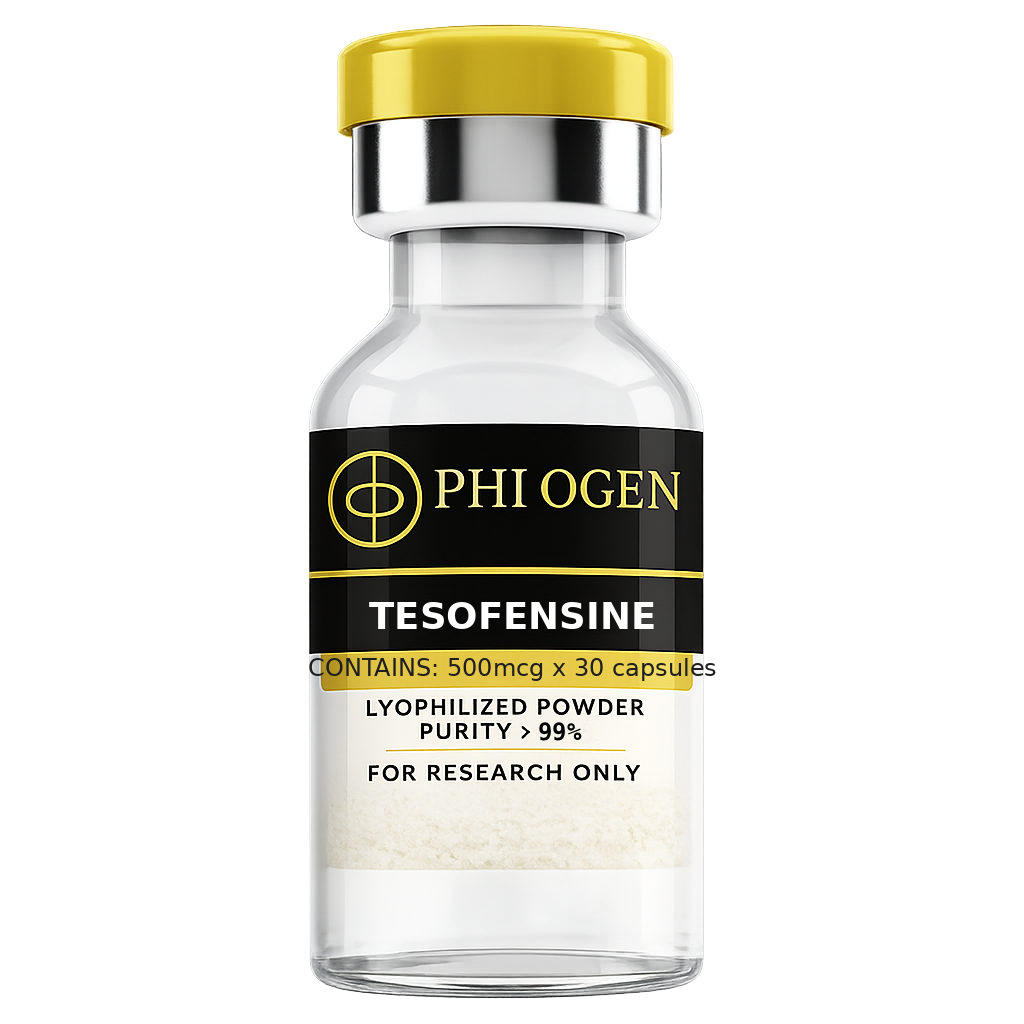
Tesofensine 500mcg x30 Capsules
Triple monoamine reuptake inhibitor — powerful appetite suppression for weight loss.
14.9%
Avg body weight reduction
68wk
STEP-1 trial duration
FDA
Reviewed mechanism
Buy verified Tesofensine 500mcg x30 capsules. Triple monoamine reuptake inhibitor for powerful appetite suppression.
Triple Monoamine Mechanism — Most Potent Non-GLP-1 Appetite Suppression
By simultaneously blocking serotonin, dopamine, and norepinephrine reuptake, tesofensine activates every major neurochemical appetite suppression pathway — producing weight loss that exceeded all comparator anti-obesity drugs in the Phase 2 TIPO-1 Lancet trial at equivalent durations.
Serendipitous Discovery from Parkinson's Trials
Tesofensine was being developed for Parkinson's disease when investigators noticed unexpected, dramatic weight loss in trial participants — the accidental discovery of one of the most potent anti-obesity mechanisms observed in any drug class.
Homeostatic and Hedonic Hunger — Both Addressed
Most anti-obesity drugs address homeostatic hunger (hypothalamic satiety signals) but not the hedonic, reward-driven eating that drives overconsumption in modern food environments. Tesofensine's dopamine component targets the mesolimbic reward circuit that GLP-1 agonists only partially address — reducing both hunger types simultaneously.
Tesofensine: Triple Monoamine Appetite Suppression Protocol
Mechanism · Evidence · Application
Tesofensine is a triple reuptake inhibitor of serotonin, dopamine, and norepinephrine — originally developed as an anti-Parkinson treatment before its mechanism of action was discovered to produce significant weight loss in clinical trials. By blocking the reuptake transporters for all three monoamine neurotransmitters simultaneously, tesofensine elevates synaptic levels of serotonin (appetite suppression via hypothalamic 5-HT signaling), dopamine (reward pathway modulation and reduced compulsive eating), and norepinephrine (sympathomimetic energy expenditure increase and appetite suppression) — producing converging neurochemical effects that are among the most powerful appetite-suppressing mechanisms pharmacologically achievable.
The discovery of tesofensine's weight loss potential was serendipitous. In Phase 2 Parkinson's trials, patients treated with tesofensine demonstrated unexpected and substantial weight loss as an adverse effect — levels of weight reduction that significantly exceeded what had been seen with any previous single anti-obesity drug. Subsequent Phase 2 obesity trials (TIPO-1, published in The Lancet 2008) confirmed and quantified this effect: tesofensine at 0.5mg/day produced 10.6% weight loss over 24 weeks, far exceeding the weight loss of all comparator anti-obesity drugs available at the time (orlistat, sibutramine, rimonabant) in equivalent trials. This result established tesofensine as one of the most potent non-GLP-1 weight loss pharmacological agents ever evaluated.
The mechanisms that produce such powerful weight loss are multi-convergent. Serotonin reuptake inhibition activates hypothalamic 5-HT2C receptors (the same target as lorcaserin, now withdrawn) to reduce hunger signaling. Norepinephrine reuptake inhibition produces sympathomimetic CNS effects that increase metabolic rate, reduce appetite through β-adrenergic hypothalamic pathways, and increase energy expenditure through thermogenic mechanisms. Dopamine reuptake inhibition modulates the mesolimbic reward circuit — reducing food reward salience and compulsive eating behavior driven by hedonic rather than homeostatic hunger. Together, these three mechanisms address both homeostatic (hypothalamic hunger regulation) and hedonic (reward-driven eating) components of food intake simultaneously.
The cardiovascular profile of triple monoamine reuptake inhibitors requires careful attention. The norepinephrine and dopamine components produce sympathomimetic cardiovascular effects: increased heart rate, blood pressure elevation, and potential arrhythmic risk at high doses — the same class concerns that led to sibutramine's market withdrawal despite its efficacy. Tesofensine at the 0.5mg Phase 2 dose showed modest cardiovascular effects that were deemed manageable, but this remains the primary safety consideration for any development at this mechanism.
Tesofensine is in Phase 3 development for obesity (NeuroSearch AS / Saniona). The 500mcg capsule format reflects the established Phase 2 efficacy dose. Available as a research compound.
Metabolic & Weight Loss Results
Triple serotonin, dopamine, and norepinephrine reuptake inhibition — most potent monoamine appetite suppression mechanism
10.6% weight loss at 24 weeks (0.5mg/day) in TIPO-1 Phase 2 Lancet trial — exceeded all contemporaneous anti-obesity drugs
Multi-convergent mechanism: homeostatic hunger (hypothalamic) + hedonic eating (reward circuit) both suppressed
Serotonin component (5-HT2C): reduces homeostatic hunger signaling — comparable to withdrawn lorcaserin
Norepinephrine component: sympathomimetic energy expenditure increase + appetite suppression
Dopamine component: mesolimbic reward circuit modulation — reduces compulsive and hedonic overeating
Originally anti-Parkinson compound — mechanism discovery was incidental to weight loss potential
Phase 3 development ongoing (NeuroSearch/Saniona) — established regulatory pathway
Mechanistically complementary to GLP-1 agonists — different pathways, potentially additive
Addresses both caloric restriction compliance (appetite) and hedonic eating behavior (reward) simultaneously
Weight Loss Protocol Guide
Tesofensine 500mcg x30 Capsules Protocol Guide
Research Protocol — Tesofensine:
· Dose: 500mcg/day (0.5mg — established Phase 2 efficacy dose)
· Route: Oral capsule
· Timing: Morning (sympathomimetic effects may interfere with sleep if taken late)
· Duration: Phase 2 trial duration was 24 weeks
Cardiovascular Safety Monitoring:
· Blood pressure and heart rate at baseline and monthly
· Primary safety concern: sympathomimetic cardiovascular effects (norepinephrine/dopamine components)
· Contraindicated with MAO inhibitors (serotonin syndrome risk)
· Caution with other sympathomimetics or adrenergic agents
Starting Protocol:
· Consider starting at 250mcg/day for first 2 weeks for sympathomimetic tolerance
· Titrate to 500mcg after tolerability confirmed
Stacking Considerations:
· Do NOT combine with other serotonergic agents (SSRIs, SNRIs, 5-HT agonists) — serotonin syndrome risk
· Mechanistically complementary to GLP-1 agonists — different CNS/peripheral targets
· Not recommended with stimulants (amphetamines, pseudoephedrine) — additive cardiovascular risk
Tesofensine 500mcg x30 Capsules
HPLC Tested · COA Verified
$89.99
$99.99
10% OFFHPLC tested · COA verified
Body Composition
Triple monoamine reuptake inhibitor — powerful appetite suppression for weight loss.
Quality Assurance
HPLC Testing
Purity verified per batch
Mass Spectrometry
Molecular identity confirmed
Certificate of Analysis
Publicly available
US-Based Supplier
HPLC + Mass Spec Verified
Synergistic Combinations
Stack Tesofensine 500mcg x30 Capsules With
Ready to Start?
Begin your Tesofensine 500mcg x30 Capsules protocol
HPLC-tested and mass-spectrometry verified, with a Certificate of Analysis for every batch.
Get Tesofensine 500mcg x30 Capsules