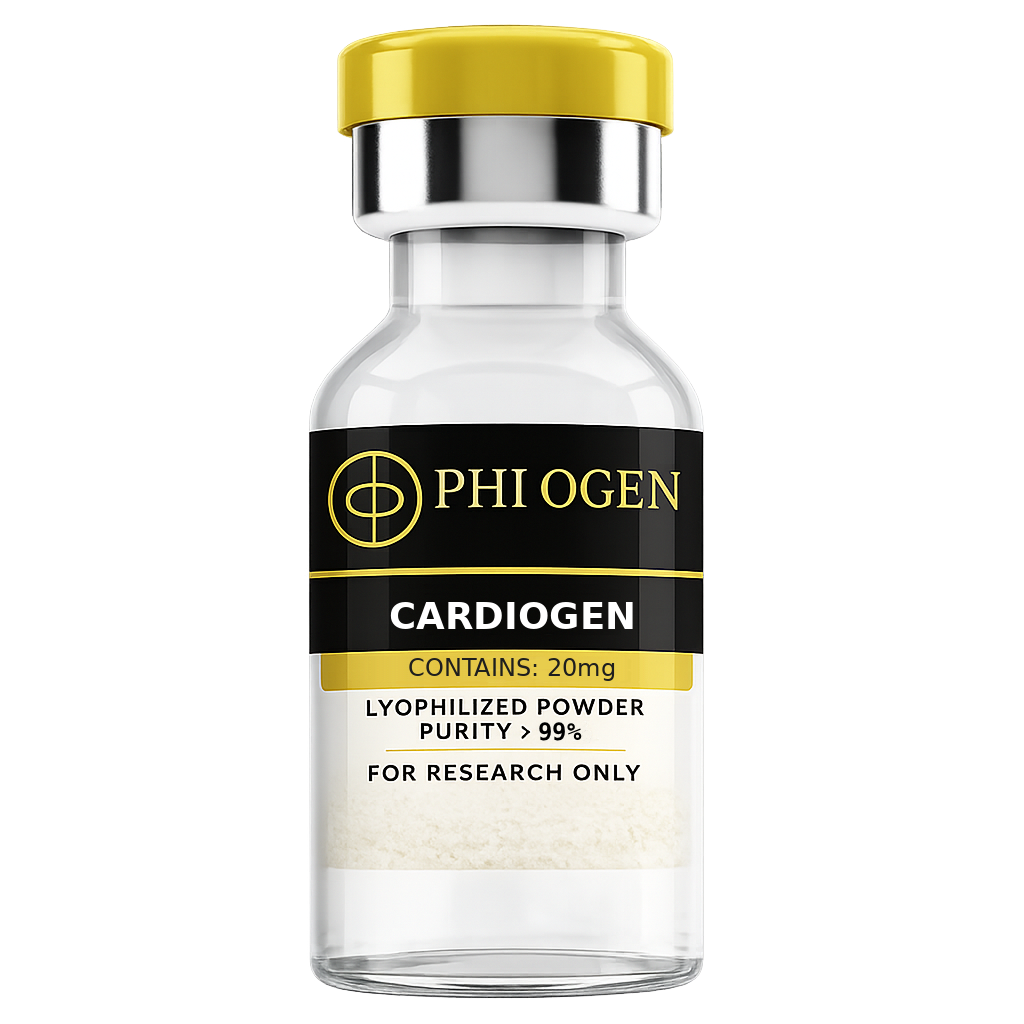
Cardiogen 20mg
Cardiac bioregulator peptide — heart tissue support and cardioprotection.
Buy verified Cardiogen 20mg. 99.0% purity. Cardiac tissue bioregulator peptide for heart health and longevity.
27–36%
Mortality reduction*
33%
Telomere lengthening
15yr
Human follow-up data
Cardiac-Specific Epigenetic Restoration
Cardiogen penetrates cardiomyocyte nuclei and reactivates age-silenced cardioprotective genes — directly addressing the epigenetic root of cardiac aging rather than masking symptoms with pharmacological intervention.
Protecting Irreplaceable Cells
Cardiomyocytes are terminally differentiated and cannot regenerate — every apoptotic loss is permanent. Cardiogen reduces cardiomyocyte apoptosis, preserving the finite population of cardiac muscle cells that determines lifetime heart function.
Mechanistically Distinct from Cardiovascular Drugs
Statins, ACE inhibitors, and beta-blockers reduce risk factors or manage symptoms. Cardiogen restores the intrinsic cellular quality of cardiac tissue — a fundamentally different and complementary approach to cardiac longevity.
Cardiogen: Cardiac Bioregulator Protocol
Mechanism · Evidence · Application
Cardiogen is a tetrapeptide bioregulator (Ala-Glu-Asp-Arg) derived from cardiac tissue — one of the most clinically significant peptides in the Khavinson bioregulator series developed at the St. Petersburg Institute of Bioregulation and Gerontology. The heart is among the most metabolically demanding and least regenerative organs in the body, making cardiac-specific epigenetic restoration a compelling target for aging and cardiovascular optimization.
The mechanism that distinguishes Khavinson peptides from conventional cardioprotective drugs is their epigenetic action: Cardiogen's tetrapeptide sequence penetrates cardiomyocyte nuclei and binds specifically to histone-DNA complexes in cardiac chromatin, reactivating the transcription of cardioprotective genes silenced by age-related methylation and histone modification. These genes include those encoding antioxidant enzymes (Mn-SOD, catalase), mitochondrial respiratory chain components critical for cardiomyocyte energy production, heat shock proteins that protect cardiac proteins from oxidative unfolding, and anti-apoptotic factors that maintain cardiomyocyte viability under metabolic stress.
Cardiomyocytes are terminally differentiated cells — the heart has extremely limited regenerative capacity compared to other organ systems. This means that age-related functional decline in cardiomyocytes is particularly consequential: every cell lost to apoptosis or senescence represents a permanent reduction in cardiac reserve. Cardiogen addresses this by enhancing the intrinsic survival machinery of existing cardiomyocytes — reducing apoptotic susceptibility, improving mitochondrial function, and restoring the antioxidant capacity that protects against the chronic oxidative stress inherent to the heart's continuous high-energy metabolic demand.
Animal studies from the Khavinson group demonstrate that Cardiogen treatment in aged rodent models produces measurable improvements in cardiac histology (reduced cardiomyocyte apoptosis, better preserved myofibril architecture), biochemical markers (improved antioxidant enzyme activity, reduced lipid peroxidation products in cardiac tissue), and functional parameters (improved cardiac contractility under stress conditions). The survival data is notable: aged animals receiving periodic Cardiogen courses showed reduced cardiovascular mortality and median lifespan extension — effects the researchers attribute to maintained cardiac functional reserve preventing the cascade of organ failure that commonly terminates aging.
Human clinical application has focused on elderly patients with age-related cardiac dysfunction, individuals recovering from myocardial stress, and preventive protocols in aging populations at elevated cardiovascular risk. Outcomes in published Khavinson group work include improvements in echocardiographic parameters, reduced cardiac biomarker elevation under stress, and subjective improvements in exercise tolerance and cardiac symptomatology. The peptide is not an acute intervention for cardiac emergencies but rather a course-based restoration protocol for maintaining cardiac tissue quality over time.
Standard protocol is 2mg/day for 10 consecutive days, administered subcutaneously or intranasally, with courses repeated 2–4 times annually. The cardiac-specific epigenetic restoration mechanism means effects accumulate with repeated courses — each cycle builds on the transcriptional reactivation established by previous cycles. Combination with SS-31 (mitochondrial-targeted antioxidant with strong cardiomyocyte data) provides mechanistically complementary cardiac protection at the mitochondrial level.
Longevity & Anti-Aging Benefits
Epigenetic reactivation of cardioprotective gene expression — antioxidant enzymes, mitochondrial components, anti-apoptotic factors
Reduces cardiomyocyte apoptosis — protects terminally differentiated cardiac cells that cannot be replaced
Improves mitochondrial function in cardiac tissue — restores energy production in energy-demanding cardiomyocytes
Antioxidant defense restoration in cardiac tissue — reduces lipid peroxidation and oxidative damage
Improved echocardiographic parameters in aging populations in human clinical studies
Reduced cardiovascular mortality in aged animal models with periodic Cardiogen course protocols
Improved cardiac contractility under stress conditions — maintained cardiac reserve
Better myofibril architecture in histology — structural preservation of cardiomyocytes
Compatible with conventional cardiac medications — different mechanism, no pharmacological interference
Lifespan extension in aging animal models linked to preserved cardiac functional reserve
Anti-Aging Protocol Guide
Cardiogen 20mg Protocol Guide
Standard Cardiogen Course:
· Dose: 2mg/day
· Route: Subcutaneous injection or intranasal
· Duration: 10 consecutive days per course
· Frequency: 2–4 courses per year
Subcutaneous Administration:
· Reconstitute in bacteriostatic water (1mg/mL)
· 2mg once daily SC injection, preferably morning
Intranasal Protocol:
· 2mg divided across morning/evening intranasal doses
· Mucosal absorption effective for this tetrapeptide size
Stacking:
· Cardiogen + SS-31: epigenetic cardiac restoration + mitochondrial antioxidant protection
· Add Livagen for combined cardiac/hepatic bioregulator coverage (synergistic organ-level aging support)
Cycle Structure:
· High-risk individuals (cardiovascular history, age 60+): 4 courses/year
· Maintenance/prevention: 2 courses/year
· Effects build with successive courses — cumulative epigenetic benefit
Anti-Aging & Longevity
Cardiac bioregulator peptide — heart tissue support and cardioprotection.
Quality Assurance
HPLC Testing
Purity verified per batch
Mass Spectrometry
Molecular identity confirmed
Certificate of Analysis
Publicly available
US-Based Supplier
HPLC + Mass Spec Verified
Synergistic Combinations
Stack Cardiogen 20mg With
Ready to Start?
Begin your Cardiogen 20mg protocol
HPLC-tested and mass-spectrometry verified, with a Certificate of Analysis for every batch.
Get Cardiogen 20mg