Methylene Blue 10mg/mL 50mL
Mitochondrial electron carrier — cognitive enhancement and neuroprotection.
High
Purity verified
COA
Batch certified
US
US supplier
Buy verified Methylene Blue 10mg/mL 50mL. Mitochondrial electron carrier for cognitive enhancement and neuroprotection.
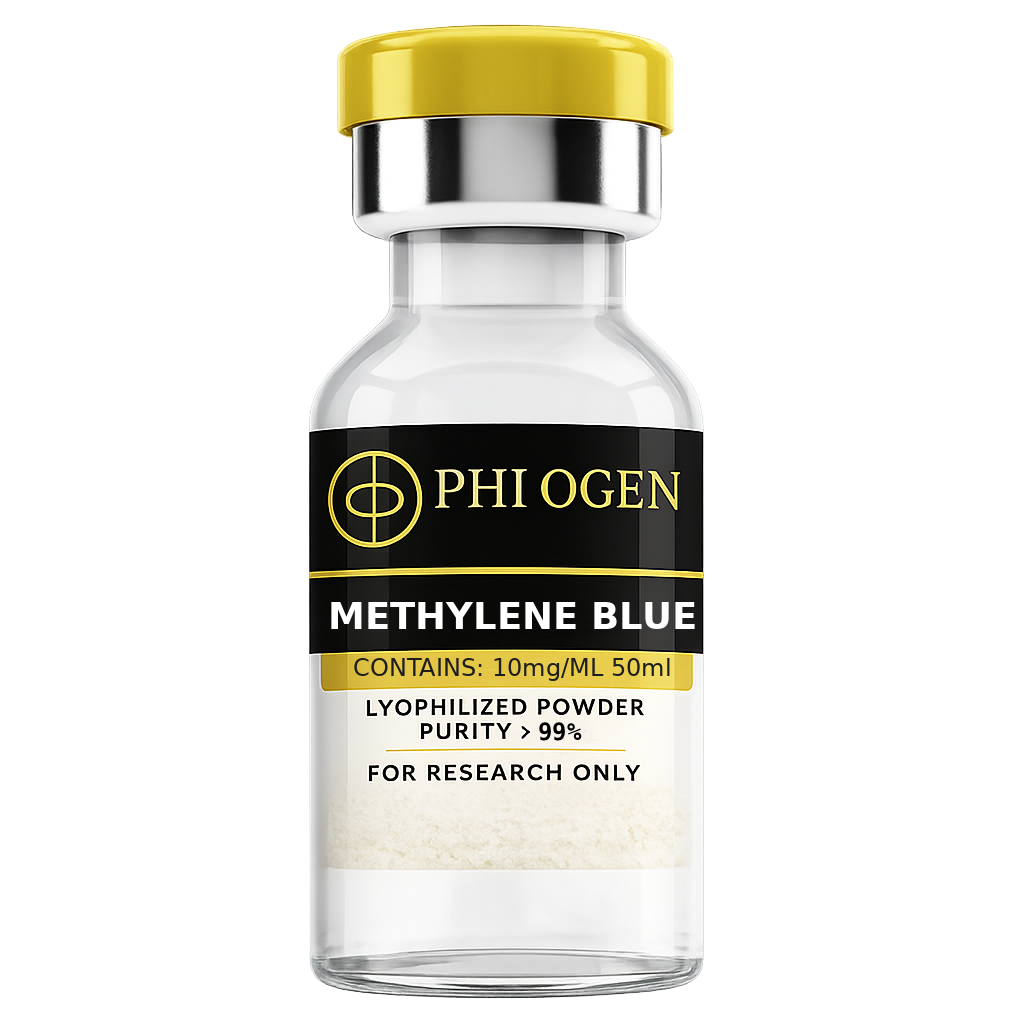
Research Grade · HPLC Tested
$53.99
$59.99
10% OFFHPLC tested · COA included
Order NowUnique ETC Electron Carrier
Methylene Blue creates an alternative electron transfer pathway in the mitochondrial ETC — increasing ATP and reducing ROS through a mechanism no other cognitive compound replicates.
150-Year Safety History
WHO Essential Medicine with 150+ years of clinical use — the most historically validated cognitive enhancer available.
Tau Aggregate Dissolution
MB and its derivatives dissolve tau neurofibrillary tangles in vitro — the pathology underlying Alzheimer's disease — making it the basis for ongoing Alzheimer's drug development.
Methylene Blue: Cognitive Mitochondrial Protocol
Mechanism · Evidence · Application
Methylene Blue (MB) is a phenothiazine compound with a 150-year history in medicine — the first fully synthetic drug ever used clinically (1876) and a WHO Essential Medicine for methemoglobinemia. At nanomolar to micromolar concentrations, Methylene Blue acts as an electron carrier in the mitochondrial electron transport chain, improving neuronal energy production, protecting against neurodegeneration, and enhancing cognitive function through mechanisms that no other compound replicates.
Mitochondrial Electron Carrier: The Core Mechanism
The mitochondrial electron transport chain (ETC) transfers electrons from NADH and FADH2 through Complexes I–IV to oxygen, driving ATP synthesis via proton gradient creation. When individual complexes in the ETC become dysfunctional or overloaded, electrons can leak and combine with oxygen to form reactive oxygen species (ROS), reducing ATP production and causing oxidative damage.
Methylene Blue acts as an alternative electron carrier that can accept electrons from NADH at Complex I, and donate them directly to cytochrome c (between Complexes III and IV) — essentially creating a bypass of the damaged ETC segments. This has two consequences: 1. Increased ATP production: More electrons reach oxygen efficiently, driving more ATP synthesis 2. Reduced ROS: The bypass reduces electron leakage at the most ROS-generating sites (Complexes I and III)
This mechanism is unique — no other cognitive or anti-aging compound provides a direct alternative electron shuttling pathway.
Cognitive Enhancement Evidence
Methylene Blue has demonstrated measurable cognitive benefits at low doses (the hormetic dose-response — too little is ineffective, too high is inhibitory): - Memory enhancement: Multiple rodent studies and at least two human clinical trials showing improvements in object memory retention and recall - Cognitive aging reversal: In aged rats, Methylene Blue improved performance on spatial and object recognition tasks to near-young-rat levels - Glucose metabolism in the brain: MB enhances glucose utilization in the prefrontal cortex and hippocampus — two regions most critical for executive function and memory - Alzheimer's disease connection: MB dissolves tau protein aggregates and neurofibrillary tangles in vitro — and the derivative LMTX has undergone clinical trials for Alzheimer's disease
Neuroprotective Mechanisms
Beyond energy enhancement, Methylene Blue protects neurons through: - Inhibition of monoamine oxidase (MAO) at higher doses — increases dopamine, serotonin, and norepinephrine - Inhibition of nitric oxide synthase (NOS) — reduces nitrosative stress - Upregulation of heme oxygenase-1 and other cytoprotective enzymes - Direct antioxidant activity (the oxidized MB form accepts electrons, preventing them from creating ROS) - Autophagy enhancement — promotes clearance of damaged proteins and organelles
Antimicrobial and Other Properties
Methylene Blue's original clinical applications were antimicrobial — it was the first synthetic drug used against Plasmodium falciparum (malaria) in 1891. It remains active against drug-resistant pathogens: - Broad antibacterial activity (particularly against gram-positive organisms) - Antifungal (Candida inhibition) - Antiviral activity in certain contexts - Antiseptic properties at higher concentrations
The Dose-Response: Hormesis
Methylene Blue follows a strict hormetic dose-response — beneficial at low doses, potentially detrimental at high doses: - Optimal range: 0.5–4mg/kg body weight (35–280mg for 70kg) - Too low (<0.5mg/kg): Minimal effects - Too high (>10mg/kg): Pro-oxidant, serotonin syndrome risk at extreme doses - Most cognitive enhancement studies use 0.5–2mg/kg
Evidence-Backed Benefits
Alternative electron carrier in mitochondrial ETC — increases ATP production and reduces ROS at Complex I/III
Unique mechanism: bypasses damaged ETC segments to restore neuronal energy production
Human clinical trial evidence for cognitive memory enhancement and recall improvement
Improved glucose utilization in prefrontal cortex and hippocampus — brain regions most affected by aging
Tau aggregate dissolution in vitro — Alzheimer's disease derivative (LMTX) in clinical trials
MAO inhibition at higher doses — increases dopamine, serotonin, and norepinephrine
Nitric oxide synthase inhibition — reduces neuronal nitrosative stress
Autophagy enhancement — promotes clearance of damaged neuronal proteins
Antimicrobial: original pharmaceutical use — active against malaria, bacteria, and fungi
WHO Essential Medicine — 150+ year safety and clinical history
Dosing & Protocol Guide
Methylene Blue 10mg/mL 50mL Protocol Guide
Methylene Blue Cognitive Protocol:
· Dose: 0.5–2mg/kg body weight
· For 70kg individual: 35–140mg per dose
· Starting dose: 35mg (low end) to assess tolerance and effects
· Route: Oral (preferred), or IV at clinical doses
· Frequency: Once daily or 5 days/week with weekend break
· Timing: Morning with meal (can cause mild nausea if taken fasted)
Dosing This Product (10mg/mL x50mL = 500mg total):
· 35mg dose = 3.5mL
· 70mg dose = 7mL
· Measure with oral syringe; can be diluted in juice to mask metallic taste
· Turns urine blue/green — completely harmless, expected
Cognitive Enhancement Protocol:
· 70mg (1mg/kg for 70kg) once daily, 5 days/week
· Consider cycling 8 weeks on / 4 weeks off to prevent tolerance and maintain sensitivity
· Best cognitive effects typically noted at 1–2mg/kg in the studies
Anti-Aging Mitochondrial Stack:
· Methylene Blue 70mg daily (ETC electron carrier and ROS reduction)
· SS-31 2mg daily (cardiolipin restoration and cristae structure)
· NAD+ 250mg 3× weekly (sirtuin substrate and ETC cofactor)
These three compounds address different aspects of mitochondrial function decline
Important Notes:
· Avoid combining with serotonergic drugs (SSRIs, MAOIs) — serotonin syndrome risk at high doses
· Does NOT interact at standard cognitive-enhancement doses (below 10mg/kg)
· Store protected from light — degrades with UV exposure
Methylene Blue 10mg/mL 50mL
HPLC Tested · COA Verified
$53.99
$59.99
10% OFFHPLC tested · COA verified
Cognitive & Nootropic
Mitochondrial electron carrier — cognitive enhancement and neuroprotection.
Quality Assurance
HPLC Testing
Purity verified per batch
Mass Spectrometry
Molecular identity confirmed
Certificate of Analysis
Publicly available
US-Based Supplier
HPLC + Mass Spec Verified
Synergistic Combinations
Stack Methylene Blue 10mg/mL 50mL With
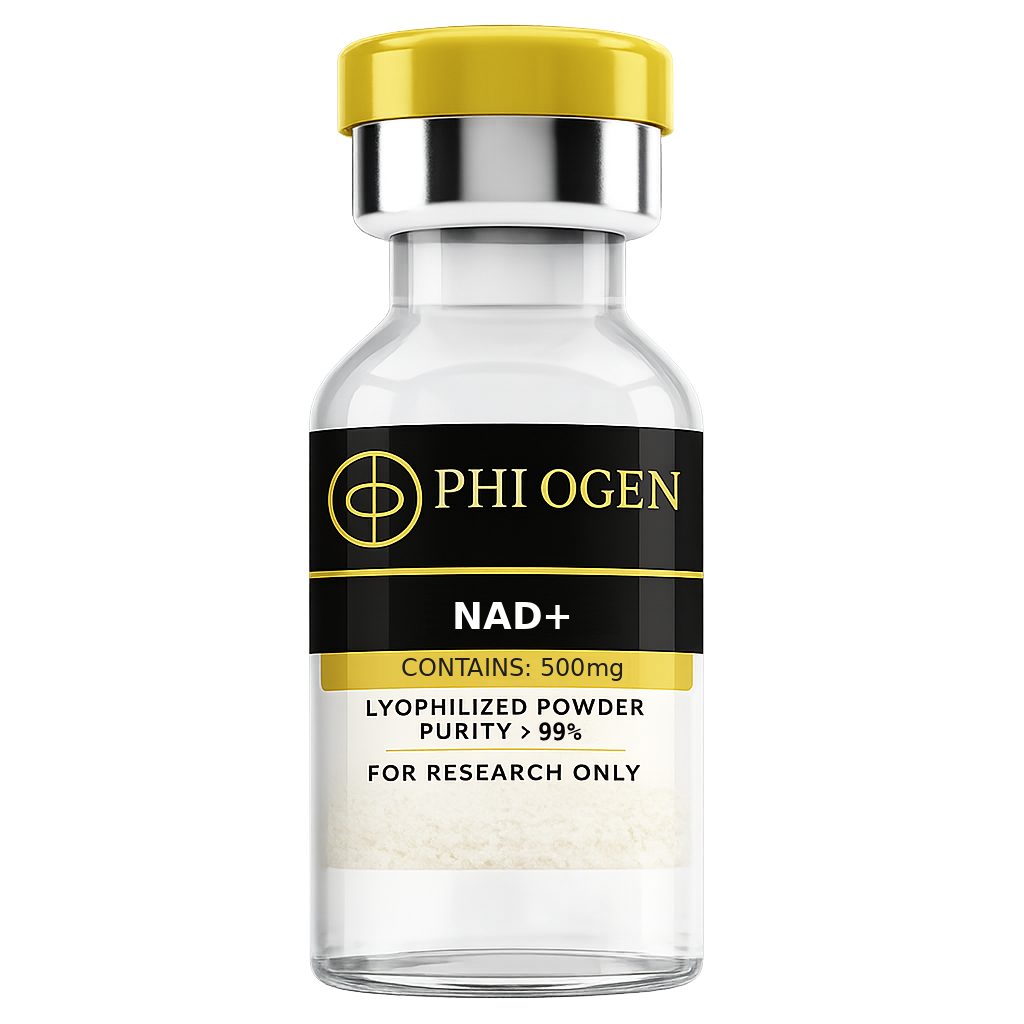
Buy trusted NAD+ (nicotinamide adenine dinucleotide) — the verified master cellular energy cofactor that declines 50% by age 50. Restoring NAD+ levels activates sirtuins, improves mitochondrial function, and slows cellular aging.
Ready to Start?
Begin your Methylene Blue 10mg/mL 50mL protocol
HPLC-tested and mass-spectrometry verified, with a Certificate of Analysis for every batch.
Get Methylene Blue 10mg/mL 50mL