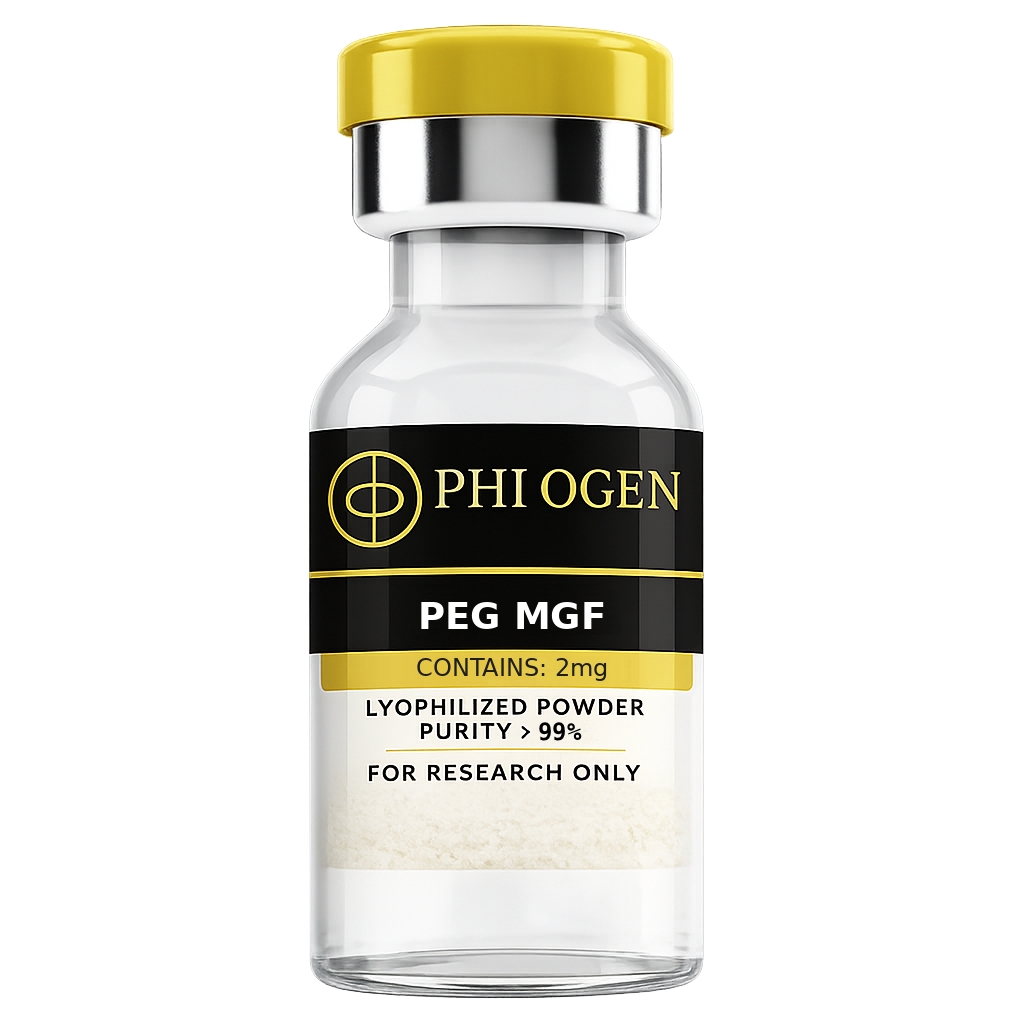
PEG-MGF 2mg
Pegylated Mechano Growth Factor — muscle repair and satellite cell activation.
3–5×
Natural GH pulse
12–24wk
Optimal cycle
0
Receptor desensitization
Buy verified PEG-MGF 2mg. 98.5% purity. Pegylated Mechano Growth Factor for muscle satellite cell activation and post-workout recovery.
Research Grade · HPLC Tested
$62.99
$69.99
10% OFFHPLC tested · COA included
Order NowSatellite Cell Activation
PEG-MGF activates dormant muscle satellite cells — the myogenic stem cells responsible for fiber repair and new growth.
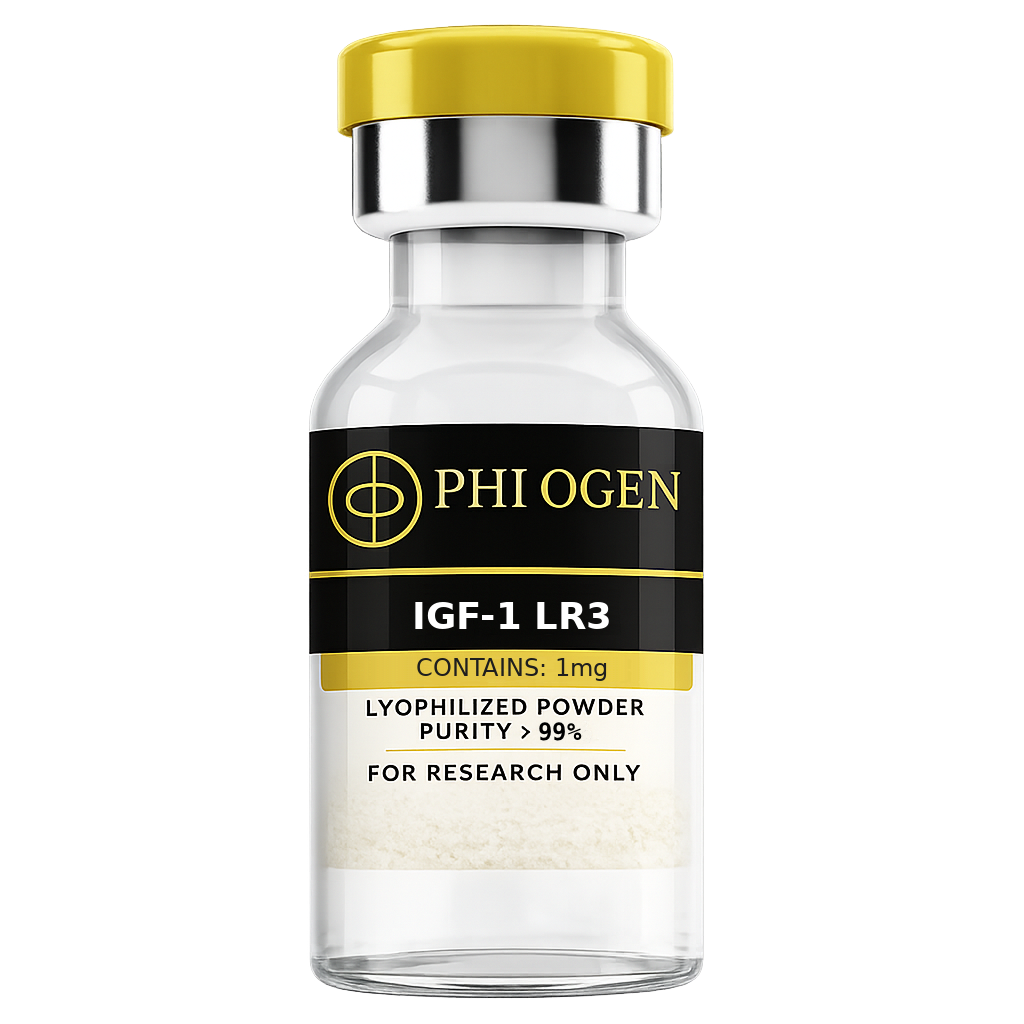
Complementary to IGF-1 LR3
MGF drives satellite cell proliferation; IGF-1 LR3 drives differentiation — together they cover both phases of the myogenic response.
PEG-Extended Half-Life
Pegylation extends native MGF's 2-minute half-life to days — transforming a locally-acting endogenous signal into a practical injectable.
PEG-MGF: Muscle Repair and Growth Protocol
Mechanism · Evidence · Application
PEG-MGF (Pegylated Mechano Growth Factor) is a modified splice variant of IGF-1 that plays a fundamentally different role in muscle biology than IGF-1 LR3. While IGF-1 LR3 drives muscle cell hypertrophy and hyperplasia through PI3K/Akt/mTOR signaling, MGF specifically activates dormant muscle satellite cells — the myogenic stem cells that proliferate and fuse with damaged muscle fibers to enable repair and new growth.
The Mechano Growth Factor Biology
MGF is generated locally in muscle tissue in response to mechanical load and damage. When muscle fibers are stressed or torn by training, local IGF-1 gene expression shifts to produce the MGF splice variant (rather than IGF-1Ea). MGF then acts in a paracrine fashion — stimulating nearby satellite cells to proliferate (divide and multiply) before they differentiate into new muscle nuclei and fibers.
This mechano-responsive, localized satellite cell activation is distinct from the systemic anabolic signaling of IGF-1: - IGF-1 LR3: Acts systemically via IGF-1R to drive mTOR activation, protein synthesis, and differentiation - MGF: Acts locally via the MGF/E-peptide domain receptor to drive satellite cell proliferation BEFORE differentiation
The two peptides are therefore sequentially complementary: MGF drives satellite cell multiplication, and then IGF-1 LR3 drives their differentiation into new muscle tissue. Running them together covers both phases of the satellite cell response.
Why Pegylation Was Critical
Native MGF has a half-life of only minutes in plasma — rapidly degraded before it can reach and activate satellite cells in peripheral muscle tissue. The polyethylene glycol (PEG) modification dramatically improves this: - Native MGF half-life: ~2 minutes - PEG-MGF half-life: Several days (PEG modification dependent) - PEG modification also increases molecular size, improving tissue retention at injection sites
This extended half-life transforms MGF from a locally-acting endogenous signal into a practical injectable peptide.
Muscle Satellite Cell Biology: Why This Matters
Muscle satellite cells are quiescent under normal conditions — lying dormant along muscle fibers. After damage or intense training, they activate, proliferate, and fuse with existing fibers (contributing new nuclei) or form entirely new fiber segments. The number of satellite cells available and their activation speed determines how effectively muscle can repair and grow.
PEG-MGF appears to: 1. Expand the satellite cell pool through proliferation 2. Accelerate the transition from quiescence to activation 3. Increase the number of nuclei available for muscle fiber repair
This translates to faster recovery between training sessions, reduced DOMS duration, and enhanced adaptation capacity during intensive training blocks.
PEG-MGF vs. IGF-1 LR3: The Stack Logic
The ideal protocol combines both: PEG-MGF post-workout (satellite cell activation phase) and IGF-1 LR3 post-workout (differentiation and hypertrophy phase). Because their mechanisms target different phases of myogenesis, they produce additive rather than redundant effects when used together during the same 4–6 week anabolic cycle.
GH Optimization Benefits
Activates dormant muscle satellite cells — expands the myogenic stem cell pool for repair and growth
Distinct mechanism from IGF-1 LR3: drives satellite cell proliferation before differentiation
Pegylation extends half-life from ~2 minutes to days — enables practical injectable delivery
Accelerates recovery between training sessions by increasing satellite cell availability
Reduces DOMS duration through faster muscle fiber repair initiation
Sequential synergy with IGF-1 LR3: MGF activates, IGF-1 LR3 differentiates
Localized paracrine mechanism — acts at the site of muscle damage
Increases myonuclei number through satellite cell fusion with existing fibers
Dosing & Cycle Guide
PEG-MGF 2mg Protocol Guide
PEG-MGF Protocol:
· Dose: 200–400mcg per injection
· Timing: Post-workout (within 30 minutes of training completion)
· Route: Subcutaneous injection near the primary trained muscle group
· Frequency: Training days only (rest days optional at 200mcg for systemic satellite cell support)
· Cycle: 4–6 weeks (same as IGF-1 LR3 to manage receptor/cell response)
Combined with IGF-1 LR3 (Optimal Anabolic Stack):
· IGF-1 LR3: 40–60mcg post-workout (drives differentiation)
· PEG-MGF: 200–400mcg post-workout (drives proliferation)
· Inject simultaneously — both peptides act in the same post-workout window
· This covers both phases of the satellite cell activation cycle
Off-Cycle:
· 4-week minimum off period after each cycle
· Continue Ipamorelin/CJC-1295 during off periods for GH axis maintenance without satellite cell overstimulation
Growth Hormone
Pegylated Mechano Growth Factor — muscle repair and satellite cell activation.
Quality Assurance
HPLC Testing
Purity verified per batch
Mass Spectrometry
Molecular identity confirmed
Certificate of Analysis
Publicly available
US-Based Supplier
HPLC + Mass Spec Verified
Synergistic Combinations
Stack PEG-MGF 2mg With
Ready to Start?
Begin your PEG-MGF 2mg protocol
HPLC-tested and mass-spectrometry verified, with a Certificate of Analysis for every batch.
Get PEG-MGF 2mg