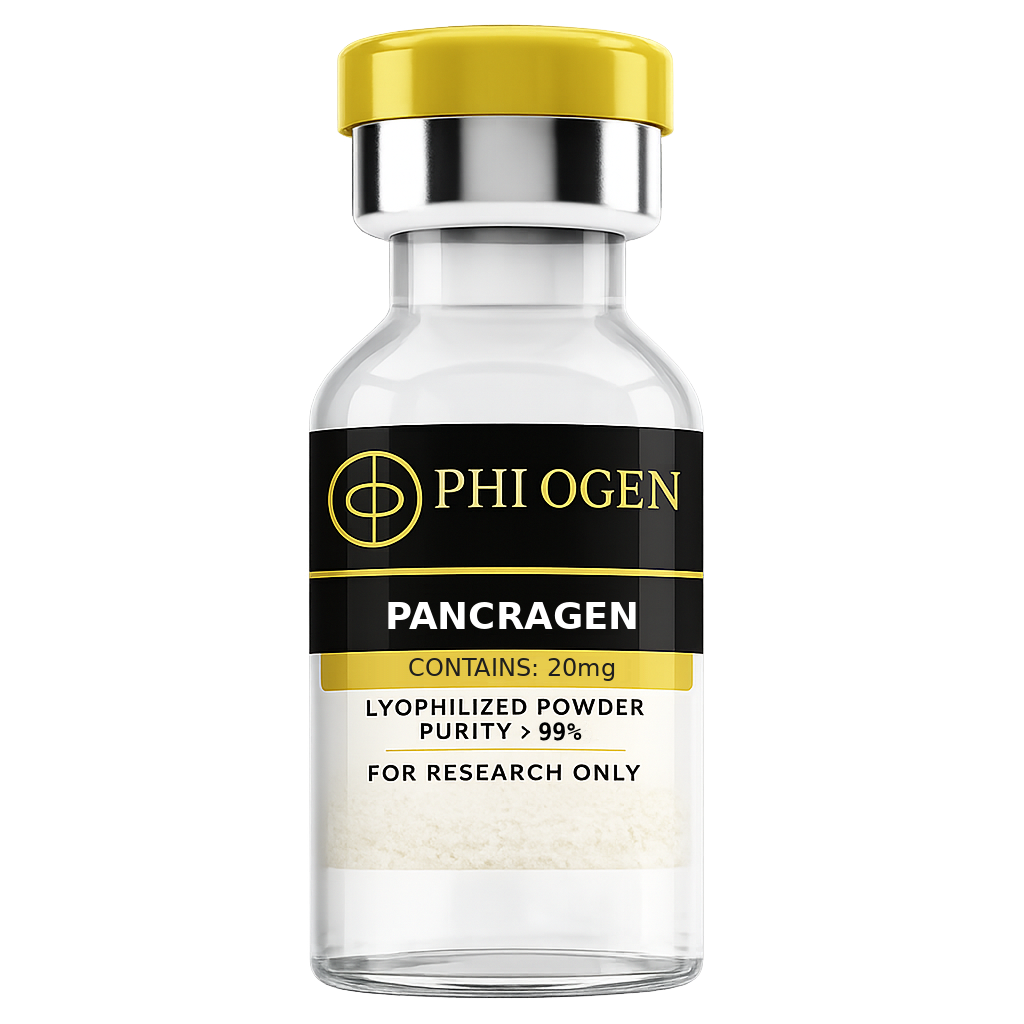
Pancragen 20mg
Pancreatic bioregulator peptide — pancreas tissue support and metabolic health.
Buy verified Pancragen 20mg. 99.0% purity. Pancreatic tissue bioregulator for metabolic health and longevity.
27–36%
Mortality reduction*
33%
Telomere lengthening
15yr
Human follow-up data
Dual Endocrine and Exocrine Restoration
Pancragen activates gene expression in both insulin-producing beta cells and digestive enzyme-producing acinar cells — addressing both the metabolic and nutritional dimensions of pancreatic aging with a single bioregulator.
Pre-Diabetic Epigenetic Prevention
Beta cell epigenetic silencing precedes T2D diagnosis by decades. Pancragen targets this pre-clinical phase — preserving beta cell secretory capacity and mass before the irreversible cell loss that defines established diabetes makes restoration increasingly difficult.
Metabolic Organ Trio
Combined with Livagen (liver) and Ovagen (GI/liver), Pancragen completes the bioregulator coverage of the three metabolic organs most central to glucose, lipid, and nutrient metabolism — providing a coordinated systemic metabolic epigenetic restoration protocol.
Pancragen: Pancreatic Bioregulator Protocol
Mechanism · Evidence · Application
Pancragen is a bioregulator peptide targeting pancreatic tissue — the organ responsible for insulin and glucagon secretion (endocrine pancreas via Langerhans islets) and digestive enzyme production (exocrine pancreas via acinar cells). Part of the Khavinson series of tissue-specific short peptides, Pancragen activates gene expression in both endocrine and exocrine pancreatic cells that progressively silences with age, chronic metabolic stress, and the cumulative damage of decades of high glucose and inflammatory exposure.
The pancreas occupies a uniquely central position in metabolic health: its beta cells produce insulin, the master anabolic hormone governing glucose uptake and storage throughout the body, while its exocrine tissue produces the complete digestive enzyme arsenal required to extract nutrients from every macronutrient class. Beta cell dysfunction — reduced insulin secretory capacity and/or reduced beta cell mass — is the defining pathophysiology of both type 1 and type 2 diabetes, with progressive beta cell failure driving the metabolic deterioration that characterizes T2D progression. Exocrine pancreatic decline, though less studied, results in progressive digestive insufficiency — fat malabsorption, protein maldigestion, and nutritional deficiencies that contribute to sarcopenia and systemic metabolic deterioration with aging.
Pancragen's tissue-specific peptide sequence penetrates pancreatic cell nuclei and reactivates age-silenced gene expression in both cell types. In beta cells, target genes include PDX1 (the master transcription factor for beta cell identity and insulin gene expression), insulin gene itself, glucokinase (the glucose-sensing enzyme that couples insulin secretion to blood glucose levels), and GLP-1 receptor (enabling beta cells to respond appropriately to incretin signals). In acinar cells, Pancragen activates genes for digestive enzymes (lipase, amylase, trypsinogen, chymotrypsinogen) and the ductal cell proteins required for bicarbonate secretion and enzyme transport to the duodenum.
Khavinson group research demonstrates Pancragen effects in aging animal pancreatic tissue: improved insulin secretory response to glucose challenge, better preserved islet architecture and beta cell morphology, increased exocrine enzyme content, and reduced pancreatic oxidative stress markers. In diabetic animal models with impaired insulin secretion, Pancragen treatment improved glucose tolerance — an outcome consistent with the hypothesized restoration of beta cell functional gene expression. Human clinical applications have been studied in elderly patients with impaired glucose tolerance, individuals with early metabolic syndrome, and preventive protocols for those with high T2D risk.
The preventive dimension of Pancragen is particularly compelling: the progressive epigenetic silencing of pancreatic gene expression begins decades before T2D is diagnosed, during the period of "compensated insulin resistance" where beta cells are overworked and accumulating damage. Intervening with epigenetic restoration during this pre-diabetic phase — preserving beta cell mass and secretory capacity before irreversible cell loss — represents a more effective strategy than attempting restoration after significant beta cell loss has occurred.
Protocol: 2mg/day for 10 consecutive days, administered subcutaneously or intranasally, repeated 2–4 times per year. Particularly relevant in combination with Livagen and Ovagen for complete hepato-pancreato-intestinal bioregulator coverage — the three organs most central to metabolic regulation acting in concert when all their bioregulators are cycling simultaneously.
Longevity & Anti-Aging Benefits
Epigenetic reactivation of beta cell gene expression — PDX1, insulin, glucokinase, GLP-1 receptor
Improved insulin secretory response to glucose challenge in aging animal models
Preserved islet of Langerhans architecture and beta cell morphology in pancreatic histology
Exocrine pancreatic enzyme expression restoration — lipase, amylase, proteases for digestive sufficiency
Relevant for pre-diabetic epigenetic intervention — restoring beta cell capacity before irreversible loss
Improved glucose tolerance in diabetic animal models following Pancragen treatment
Reduced pancreatic oxidative stress — protects beta cells from ROS damage that drives dysfunction
Both endocrine and exocrine coverage — single bioregulator addresses all pancreatic cell types
Preventive metabolic application: anti-aging intervention decades before T2D clinical presentation
Synergistic with Livagen + Ovagen for complete metabolic organ bioregulator stack
Anti-Aging Protocol Guide
Pancragen 20mg Protocol Guide
Standard Pancragen Course:
· Dose: 2mg/day
· Route: Subcutaneous injection or intranasal
· Duration: 10 consecutive days per course
· Frequency: 2–4 courses per year
Metabolic Bioregulator Stack:
· Pancragen + Livagen + Ovagen: complete hepato-pancreato-intestinal bioregulator coverage
· Add MOTS-c for AMPK-mediated mitochondrial metabolic support alongside epigenetic pancreatic restoration
Preventive vs. Therapeutic Application:
· Preventive (pre-T2D, impaired glucose tolerance): 2 courses/year starting in 40s
· Therapeutic (established metabolic dysfunction): 4 courses/year + metabolic monitoring
· Not a replacement for insulin or GLP-1 agonist therapy — complementary epigenetic support
Monitoring:
· HbA1c and fasting glucose at baseline and 6-month intervals
· HOMA-IR for insulin resistance tracking
· Pancreatic enzyme activity (fecal elastase) for exocrine function assessment
Timing:
· No specific meal timing requirement for peptide bioregulators
· Morning administration with breakfast (associates bioregulator activity with metabolic demand)
Anti-Aging & Longevity
Pancreatic bioregulator peptide — pancreas tissue support and metabolic health.
Quality Assurance
HPLC Testing
Purity verified per batch
Mass Spectrometry
Molecular identity confirmed
Certificate of Analysis
Publicly available
US-Based Supplier
HPLC + Mass Spec Verified
Synergistic Combinations
Stack Pancragen 20mg With
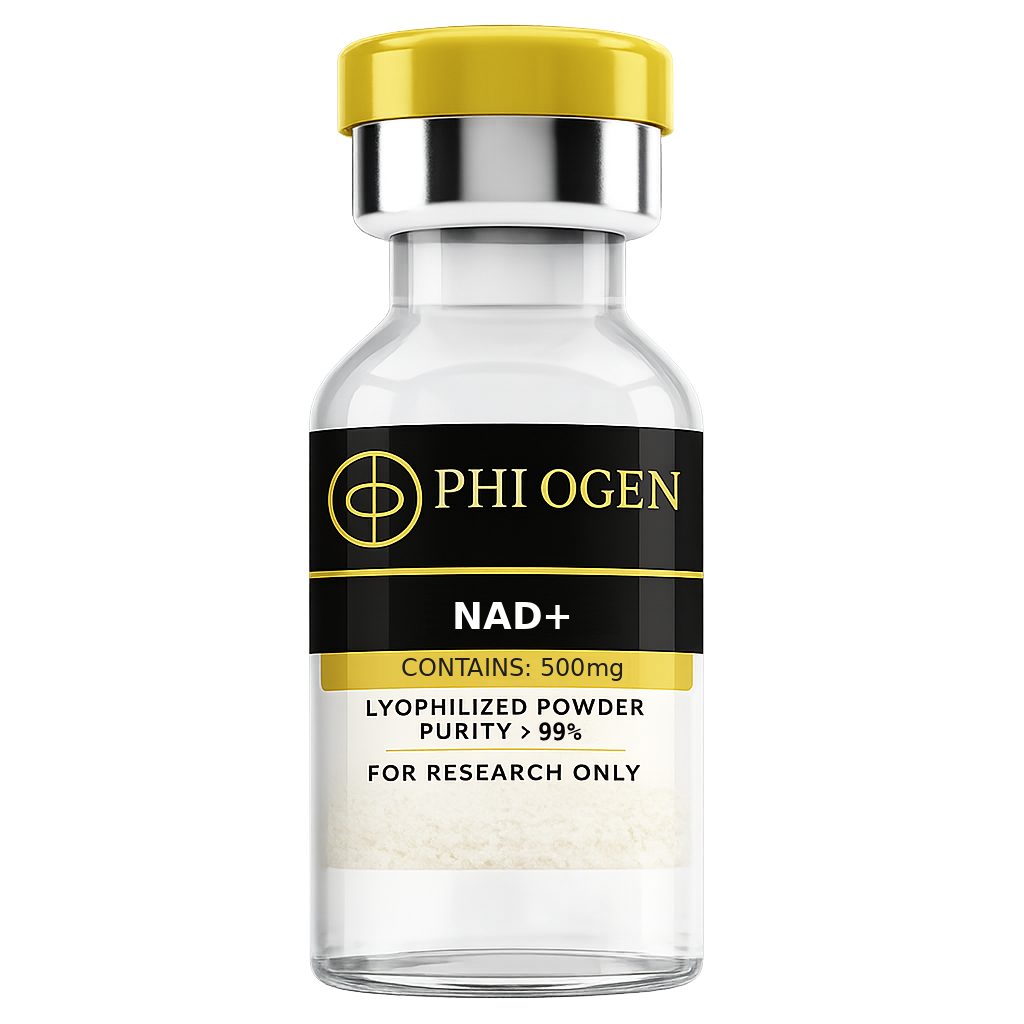
Buy trusted NAD+ (nicotinamide adenine dinucleotide) — the verified master cellular energy cofactor that declines 50% by age 50. Restoring NAD+ levels activates sirtuins, improves mitochondrial function, and slows cellular aging.
Ready to Start?
Begin your Pancragen 20mg protocol
HPLC-tested and mass-spectrometry verified, with a Certificate of Analysis for every batch.
Get Pancragen 20mg