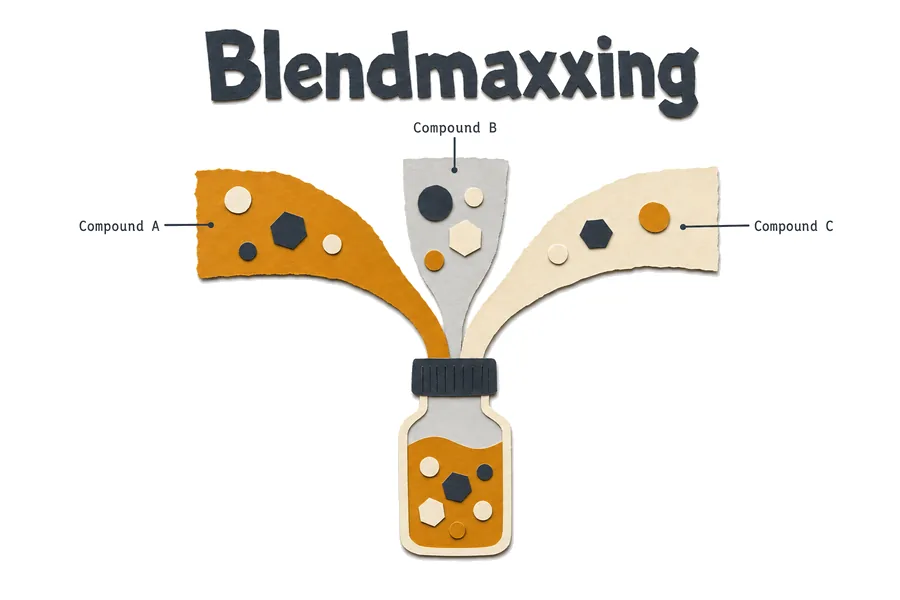
Blendmaxxing Peptides for Sale
Blendmaxxing covers pre-formulated peptide blends — two or more compounds combined in a single vial at defined ratios. The rationale is mechanistic rather than commercial: each pairing has a published research basis for combining its components. The BPC-157/TB-500 recovery stack is the most extensively studied pairing, while Ipamorelin/CJC-1295 combines a ghrelin agonist with a GHRH analogue for complementary GH release. Metabolic stacks like Cagri-Sema and Cagri-Reta layer multiple receptor mechanisms for fat-loss research. Each blend below is compared across vendors on price, dose variants, and certificate-of-analysis practice.
8 peptides in this category.
Blends & stacks
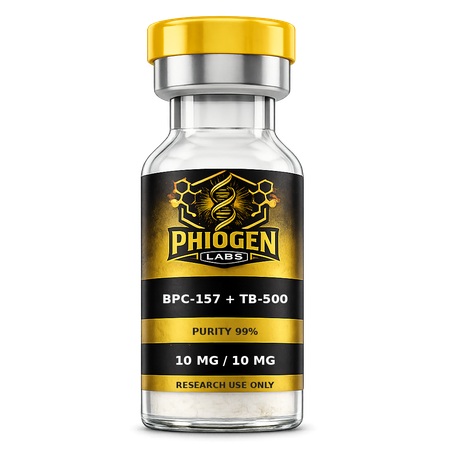
BPC-157 + TB-500 Blend
From
$53.99
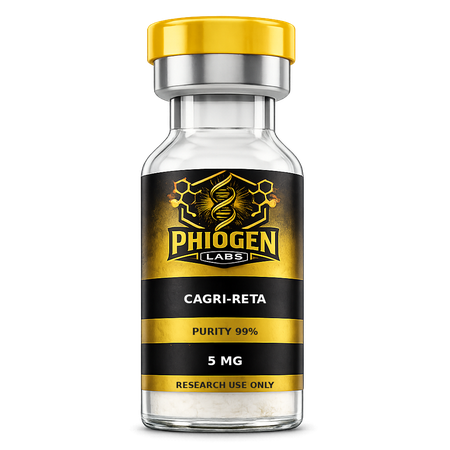
Cagri-Reta Blend
From
$116.99
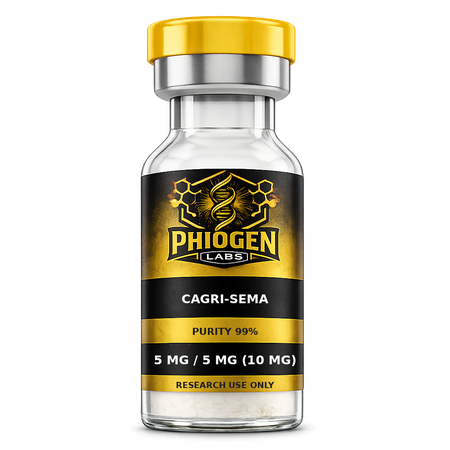
Cagri-Sema Blend
From
$161.99
GLOW Blend
From
$98.99
Ipamorelin/CJC-1295 Blend
From
$80.99
Ipamorelin/Tesamorelin Blend
From
$116.99
KLOW Blend
From
$107.99
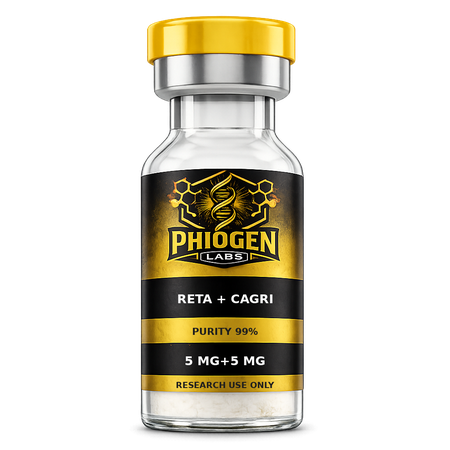
Reta-Cagri Blend
From
$134.99
Blendmaxxing: why anything is pre-mixed at all
Blendmaxxing means co-formulating two or more compounds in one vial at a fixed ratio. The case for doing that is mechanistic, not commercial: in each pairing below, the components act through non-overlapping pathways, so co-delivery adds coverage instead of stacking the same signal twice. The case against is equally simple — a fixed ratio is a decision made at formulation that you cannot revisit mid-protocol. Every Blendmaxxing vial is that trade.
BPC-157 + TB-500
The most extensively studied pairing in recovery work. The two operate through non-overlapping primary mechanisms: BPC-157 through VEGFR2-driven angiogenesis, FAK-Paxillin cell migration, and NO-system mucosal repair, distributed locally; TB-500 through G-actin sequestering and F-actin polymerisation, distributed systemically via circulation.
Their half-lives are what make the blend interesting: roughly 4 hours for BPC-157 against roughly 10 days for TB-500. Dosed separately that means daily or twice-daily BPC-157 alongside weekly TB-500. A 1:1 pre-blend covers the acute local signal while delivering the weekly systemic dose in the same draw, at the cost of over-delivering TB-500 on any protocol that keeps BPC-157 daily. Loading protocols in the literature run 5 mg of each twice weekly for four weeks, dropping to 2.5 mg each weekly.
Ipamorelin + CJC-1295
GHRH-receptor stimulation from CJC-1295 (No DAC) plus ghrelin-receptor stimulation from Ipamorelin. The two receptors amplify GH pulse output additively, producing larger secretory events than either compound alone at the same dose — the synergy is well established and depends entirely on the two arriving together, which is exactly what a shared vial guarantees.
A 5 mg + 5 mg formulation supports the standard 100–200 mcg per pulse of each. Dosing is pre-sleep to align with the nocturnal pulse, optionally with a fasted morning or pre-workout second dose; carbohydrate within ~90 minutes raises somatostatin tone and blunts the release. The DAC variant of CJC-1295 is deliberately absent from these blends — its 6–8 day half-life flattens the pulsatility the pairing exists to amplify.
Cagrilintide combinations: CagriSema and Cagri-Reta
Cagrilintide is a long-acting amylin analogue; the GLP compounds it is paired with are incretin receptor agonists. Amylin and GLP-1 signal satiety through distinct hypothalamic pathways, so the combination engages two non-competing mechanisms.
The SCALE NEXT Phase 2 trial ran CagriSema against its own components: −15.6% body weight at 32 weeks, against −8.0% for semaglutide alone and −8.1% for cagrilintide alone. GI tolerability in the combination arm was comparable to or better than semaglutide alone, supporting the hypothesis that amylin activation attenuates some of the GLP-1 GI burden.
Cagri-Reta extends the same strategy to a triagonist backbone — Retatrutide's GLP-1R + GIPR + GcgR coverage plus amylin agonism, four non-overlapping pathways. No head-to-head Phase 2/3 data exists for that combination. The mechanistic case is sound; the trial validation is not there yet.
When Blendmaxxing costs more than its parts
Blendmaxxing is the one place on this site where the arithmetic is regularly worse than it looks, for three reasons. First, label mass is shared: a "10mg total" vial holds 5 mg of each component, so comparing it to a 10 mg single vial overstates what you are getting by exactly double. Second, asymmetric protocols waste product — a blend dosed to hit the BPC-157 schedule delivers far more TB-500 than the protocol calls for, and that surplus is real money. Third, the singles market is deeper: most components here are carried by more vendors individually than in blended form, so the blend is frequently the single-sourced listing with no price check available. Price each blend per milligram of total peptide, then compare it against the same compounds on the Regenmaxxing, Massmaxxing, and Metabolmaxxing shelves before deciding the convenience is free.
What to check before dosing a Blendmaxxing vial
- Ratio fit: pre-formulated ratios suit standard protocols. Asymmetric dosing — higher-frequency BPC-157 than TB-500, or component-specific escalation — needs separate vials
- Stability: two peptides sharing a solvent need both components validated at the stored concentration. Ask for the COA covering the blend, not the individual compounds
- Dose maths: every component is drawn from the same volume, so confirm per-component concentration before calculating anything
Blendmaxxing: the questions that come up
What is the mechanistic basis for the BPC-157 and TB-500 combination?
BPC-157 acts locally through VEGFR2 angiogenesis, FAK-Paxillin cell migration, and NO-pathway mucosal repair — with a short ~4-hour active window. TB-500 distributes systemically via circulation through G-actin sequestering and F-actin dynamics with a ~10-day half-life. The pathways do not overlap, creating additive rather than redundant coverage. The combination addresses both local precision repair and systemic healing distribution simultaneously.
What did the CagriSema Phase 2 trial actually show?
The SCALE NEXT Phase 2 trial ran CagriSema (cagrilintide + semaglutide) against each component alone. At 32 weeks, CagriSema produced −15.6% body weight vs −8.0% for semaglutide alone and −8.1% for cagrilintide alone. The combination result was roughly double either monotherapy — consistent with two independent satiety pathways being engaged. GI tolerability in the CagriSema arm was not worse than semaglutide alone despite higher overall efficacy.
Why might a researcher choose individual vials over a pre-formulated blend?
Pre-formulated blends deliver fixed component ratios per dose volume. A researcher needing asymmetric dosing — for example, higher-frequency BPC-157 than TB-500, or different component dose escalation timing — requires individual vials to control each compound independently. Blends are optimised for standard protocol structures. Protocols with non-standard component ratios, loading phases that differ by compound, or multi-compound stacks with additional agents are typically better served by separate vials.
What evidence exists for the Ipamorelin/CJC-1295 combination specifically?
The synergy between GHRH analogues and ghrelin receptor agonists is mechanistically established — the two receptor systems have additive effects on somatotroph GH secretion. Direct head-to-head clinical trials comparing the combination vs monotherapy in normal adults are limited. The foundational evidence for each component individually is Phase 1/2 grade. The combination is widely used in clinical GH deficiency protocols based on the mechanistic rationale, but the combination itself lacks a dedicated Phase 3 RCT.