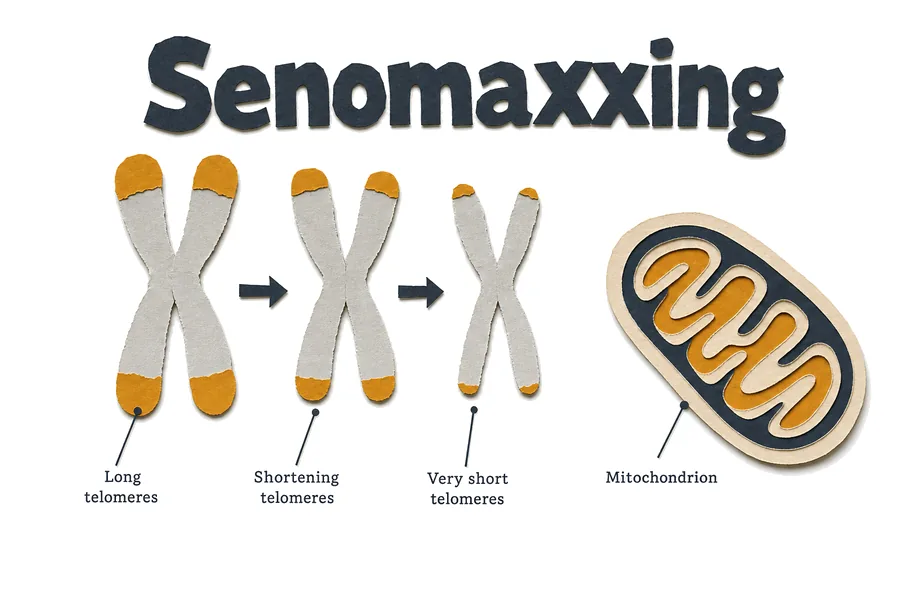
Senomaxxing Peptides for Sale
Senomaxxing covers peptides researched against the measurable hallmarks of aging — telomere attrition, epigenetic drift, NAD+ depletion, and senescent-cell accumulation. The evidence here spans an unusually wide range, from decades of longitudinal human data on Epitalon to recent preclinical senolytic work on FOX04-DRI. GHK-Cu, a naturally occurring copper-binding tripeptide, is studied for its broad influence on gene expression, while NAD+ precursors target cellular energy metabolism directly. The Khavinson bioregulator peptides add tissue-specific gene-regulation effects to the group. Each compound below is compared across vendors on pricing, dose options, and certificate-of-analysis practice.
16 peptides in this category.
Abaloparatide
CAS 247062-33-5
From
$134.99
ACE-031
From
$135.00
Epitalon
CAS 307297-39-8
From
$53.99
FOXO4-DRI
From
$134.99
GHK-Cu
CAS 49557-75-7
From
$45.00
Glutathione
CAS 70-18-8
From
$44.99
Melanotan I
CAS 75921-69-6
From
$53.99
Melanotan II
CAS 121062-08-6
From
$53.99
Methylene Blue
CAS 61-73-4
From
$53.99
NA-Epitalon
From
$71.99
NAD+
CAS 53-84-9
From
$69.99
P21
From
$80.99
PNC-27
From
$107.99
PT-141
CAS 189691-06-3
From
$62.99
RU-58841
CAS 154992-24-2
From
$71.99
SNAP-8
CAS 868844-74-0
From
$40.50
Senomaxxing targets four hallmarks, not one pathway
Senomaxxing is organised around measurable biological hallmarks rather than a single pathway: telomere attrition, epigenetic drift and gene expression dysregulation, NAD+ depletion, and the accumulation of senescent cells. Each compound below addresses one or two of those, and almost none of them overlap — which makes Senomaxxing the one shelf here where stacking is the norm rather than a shortcut. It also carries the widest evidence gradient on the site, spanning 50 years of longitudinal human data at one end and a single 2017 mouse paper at the other.
GHK-Cu and the 4,000-gene result
GHK-Cu (glycyl-L-histidyl-L-lysine copper(II) complex) is a naturally occurring tripeptide-copper chelate found in plasma, saliva, and urine. Plasma concentrations fall roughly 60% between ages 20 and 60, from ~200 ng/mL to ~80 ng/mL.
What the gene expression work showed
The 2012 Broad Institute analysis (Pickart et al.) using LINCS gene expression profiling found GHK-Cu significantly modulates over 4,000 human genes. Upregulated targets include:
- Collagen I synthesis (+70% in fibroblast models)
- Collagen III synthesis (+50%)
- Elastin and glycosaminoglycan production
- Antioxidant enzymes (superoxide dismutase, catalase)
- VEGF and FGF: angiogenic growth factors relevant to wound healing
Downregulated targets include genes associated with chronic inflammation and cellular senescence markers. The scale of that number is genuine and routinely oversold: it is in vitro database analysis, not a clinical outcome.
Skin context
In fibroblast culture, GHK-Cu reverses gene expression patterns correlated with photoaging and chronological aging. It is among the most studied peptides for topical work, with both in vitro fibroblast data and randomized clinical data on wrinkle depth.
Epitalon and telomerase
Epitalon (Ala-Glu-Asp-Gly) is a synthetic tetrapeptide developed by Vladimir Khavinson at the St. Petersburg Institute of Bioregulation — the most studied synthetic telomerase activator outside the TA-65/cycloastragenol class. It upregulates telomerase reverse transcriptase (TERT) expression, promoting elongation of telomeric DNA on chromosome ends; shortened telomeres are a recognised biomarker of replicative senescence.
The evidence is unusual in shape: over 50 years of work from the Khavinson group covering cell culture, rodent longevity, and human cohorts, including a 2003 study in elderly volunteers showing telomere length preservation at 3-year follow-up. Volume is high, independent replication is thin. It also stimulates pineal melatonin production, with downstream circadian and oxidative-stress effects.
NAD+ and the energy side of aging
NAD+ is a coenzyme central to cellular energy metabolism, sirtuin activation, and DNA repair via PARP enzymes. Levels fall roughly 50% between ages 40 and 60, driven by PARP consumption during age-related DNA damage and CD38 upregulation in aging immune tissue. Repletion is among the most extensively studied interventions in aging biology, with human trials demonstrating safe elevation via precursors, and its role in SIRT1/SIRT3 activation links it to mitochondrial biogenesis.
FOX04-DRI: clearing senescent cells
Senescent cells accumulate with age and secrete a pro-inflammatory cocktail termed the senescence-associated secretory phenotype. FOX04-DRI is a D-retro-inverso peptide that disrupts the FOXO4-p53 interaction senescent cells depend on, selectively triggering apoptosis in p21-positive cells while leaving healthy cells intact. The 2017 Cell paper (Baar et al.) reported regeneration markers, fitness improvements, and hair regrowth in mice following senescent cell clearance. There are no human trials.
Glutathione and Methylene Blue: the non-peptide entries in Senomaxxing
Glutathione is the primary intracellular antioxidant, declining with age and depleted under oxidative stress; research contexts include mitochondrial protection, metal detoxification, and immune cell function. Oral bioavailability of the intact molecule is poor, which is why IV is the standard route and why the liquid listings on this shelf are priced per millilitre rather than per milligram. Methylene blue acts as an alternative electron carrier in the mitochondrial electron transport chain, bypassing Complex I/III dysfunction; at low doses (0.5–4 mg/kg) it improves mitochondrial efficiency with neuroprotective effects across preclinical models. Human data is limited to case reports and small trials.
Senomaxxing evidence is not evenly distributed
Reading Senomaxxing as one category is the mistake worth avoiding. NAD+ repletion has human trials. GHK-Cu has randomized topical data and an enormous in vitro base. Epitalon has decades of data from essentially one research group. FOX04-DRI has one landmark mouse paper. Those are four different levels of confidence sitting in the same grid at similar prices. Nothing about Senomaxxing pricing tracks evidence quality, so read the grade before the price.
Senomaxxing, asked and answered
How does Epitalon affect telomere length and what is the quality of that evidence?
Epitalon upregulates TERT (telomerase reverse transcriptase) expression, the catalytic component of telomerase. Khavinson's 2003 human cohort study showed measurable telomere length preservation in elderly subjects at 3-year follow-up. The evidence base is extensive in volume but limited in independent replication — most data originates from the Khavinson group. Cell culture and rodent data are consistent. Human RCTs from independent groups remain lacking.
What does the GHK-Cu gene expression data actually show?
The 2012 Broad Institute analysis using the LINCS gene expression database found GHK-Cu modulates over 4,000 genes — a scale that exceeds most pharmaceutical compounds. Upregulated targets include collagen synthesis genes, antioxidant enzymes, and angiogenic factors. Downregulated targets include inflammation and senescence-associated genes. This is in vitro/database analysis, not a clinical trial outcome — the mechanistic basis is strong; clinical translation requires direct RCT validation.
What is FOX04-DRI and how selective is it for senescent cells?
FOX04-DRI is a D-retro-inverso peptide — a mirror-image, reversed-sequence peptide scaffold that resists proteolysis. It competes with endogenous FOXO4 for p53 binding, disrupting a survival signal that senescent cells depend on but healthy cells do not. The 2017 Cell paper demonstrated selective apoptosis in p21-positive senescent cells with minimal effect on non-senescent cell viability in culture. All data to date is preclinical (mouse).
Can GHK-Cu and Epitalon be used in the same protocol without conflict?
Yes — their mechanisms operate through entirely non-competing pathways. GHK-Cu acts at the gene expression level via chromatin remodelling and transcription factor modulation. Epitalon acts at the telomerase/pineal level affecting telomere maintenance and melatonin production. There is no known pharmacokinetic or pharmacodynamic interaction between the two. Combined use addresses distinct aging hallmarks: epigenetic drift (GHK-Cu) and telomere attrition (Epitalon).